A whole-home generator offers amazing peace of mind, but it needs a strong partner to work correctly. That partner is your electrical panel. It’s the command center for your home’s electricity, directing power from the grid or your generator. If your panel is old or undersized, it simply can’t support a modern generator when the lights go out. Before you install anything, you have to check your system’s readiness. Knowing how your home outlets are connected to a panel box is the critical first step to ensure your investment in backup power is safe and reliable.
Key Takeaways
- Your Panel Dictates Your Home’s Potential: Your electrical panel is the command center that determines how much power your home can safely handle, making its condition crucial for running modern appliances and supporting major additions like a standby generator.
- Don’t Ignore the Warning Signs: Flickering lights, frequently tripping breakers, and buzzing sounds aren’t minor annoyances; they are clear indicators that your panel is overloaded and needs a professional inspection to prevent serious safety hazards.
- Simple Maintenance Ensures Reliability: Keep your system safe by testing GFCI/AFCI breakers monthly and ensuring the area around your panel is always clear, which allows for easy access during routine service or an emergency.
What Is an Electrical Panel and How Does It Work?
Think of your home’s electrical panel as the heart of your entire electrical system. Tucked away in a basement, garage, or utility closet, this metal box is responsible for safely taking power from the utility company and distributing it throughout your house. Every light you turn on, every appliance you run, and every device you charge gets its power through this central hub. Understanding how it works is the first step to managing your home’s electricity safely and efficiently, especially when considering additions like a standby generator.
Meet the Heart of Your Home’s Electrical System
Your electrical panel, often called a breaker box, is the main control center for all the electricity in your home. Its primary job is to route incoming power into smaller, individual circuits. Each circuit is protected by a circuit breaker, which is a switch designed to automatically shut off if the circuit becomes overloaded or shorted. This prevents overheating, which could otherwise damage your appliances or even cause a fire. Keeping this panel in good working order is essential for a safe home, and it’s the foundation of any reliable residential electric system.
How Power Gets From the Grid to Your Gadgets
The journey of electricity to your outlets is a straightforward one. Power travels from the main utility line to your home, passing through an electric meter that measures your usage. From there, it flows into your electrical panel. Inside the panel, the power is divided among the various circuits that run to different parts of your house—one for the kitchen outlets, another for the bedroom lights, and so on. This is also where a standby generator connects to your home. During an outage, an automatic transfer switch tells the panel to draw power from the generator instead of the grid, ensuring a seamless transition. A proper residential standby generator installation integrates directly with this system.
A Look Inside: Key Components of Your Panel
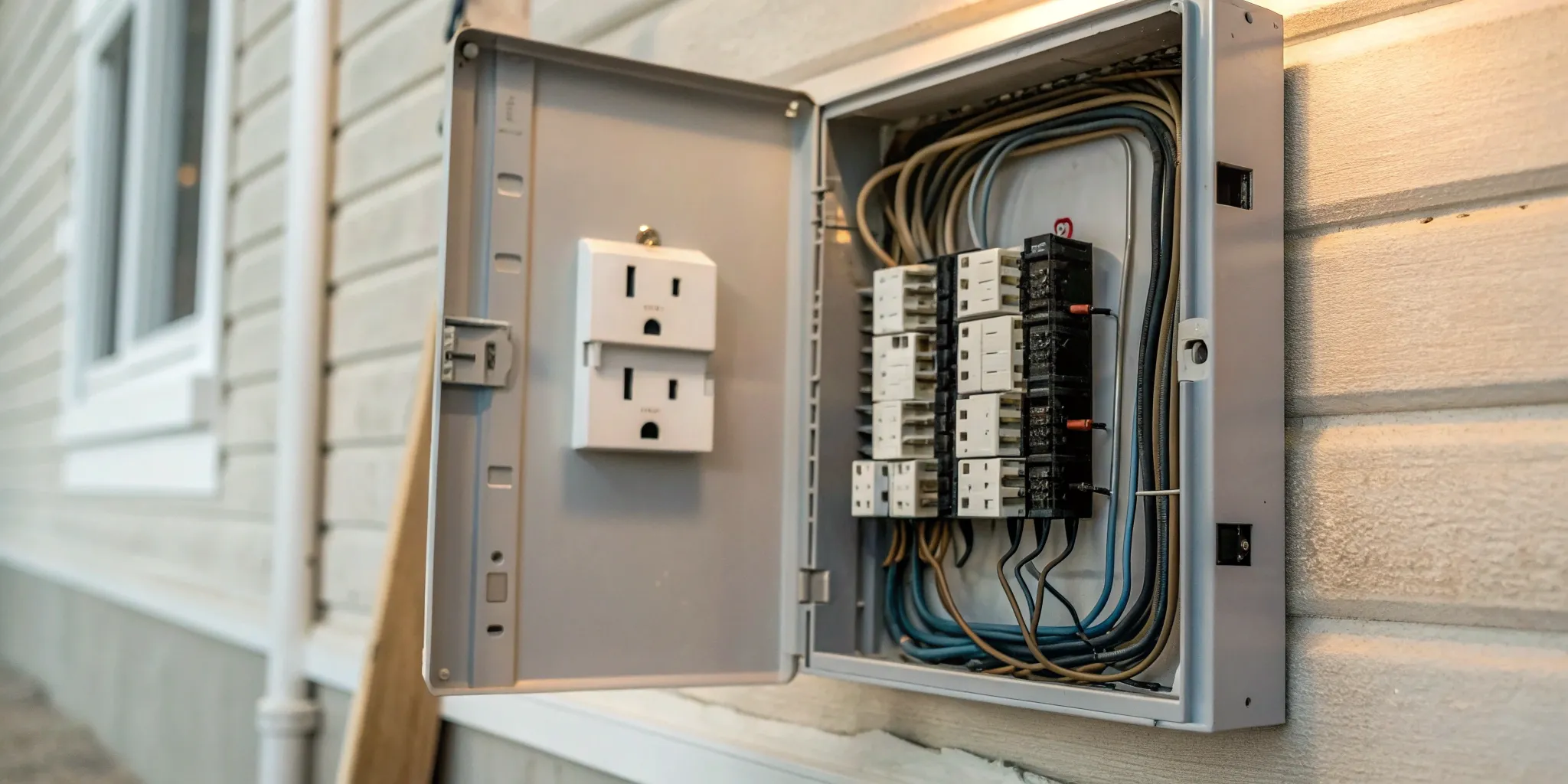
At first glance, the inside of an electrical panel can look like a confusing web of wires and switches. But once you break it down, it’s a logical system with a few core components working together to keep your home powered and safe. The main parts you’ll find are the main breaker, bus bars that distribute power, the individual circuit breakers that protect different areas of your home, and the essential neutral and grounding wires. Understanding what each part does is helpful for any homeowner, as it demystifies how your home’s electricity works and highlights why professional service is so important for maintaining a safe and reliable system.
The Main Breaker, Bus Bars, and Breakers
The main breaker is the master switch that controls all the power coming into your home. You can use it to shut off electricity to the entire house in an emergency or for electrical work. From the main breaker, power flows to two hot bus bars, which are metal strips that run down the center of the panel. These bars distribute the electricity to the individual circuit breakers snapped into place on either side. Each of these smaller breakers is designed to protect a specific circuit—like your kitchen outlets or bedroom lights—by automatically tripping, or shutting off, if it detects an overload or a short. This crucial safety feature prevents overheating and potential fires, and if you find breakers tripping often, it’s a sign you may need professional electrician repairs.
Understanding Neutral and Grounding Wires
Beyond the breakers, you’ll see two other important components: the neutral bus bar and the grounding bus bar. The neutral wires, typically white, complete the electrical circuit by providing a path for electricity to return to the panel. The grounding wires, which are usually bare copper or green, are your system’s most critical safety feature. If there’s a fault or short circuit, the grounding wire provides a safe path for the stray electricity to travel directly into the earth, preventing dangerous electric shocks. Proper grounding is non-negotiable for a safe home and is a key part of any major electrical project, including the installation of a Generac generator.
What Does the Main Breaker Actually Do?
At the top of your electrical panel, you’ll find one large switch that’s separate from the others. This is the main breaker, and it controls the flow of electricity to your entire house. Think of it as the master switch. If you ever need to shut off all the power for safety reasons, this is the switch you’ll flip. The main breaker also serves as a critical safety device. If it detects a massive power surge from the utility line or a major fault within your home, it will automatically trip, cutting off all electricity to prevent widespread damage. If your main breaker is tripping frequently, it’s a sign you may need professional electrician repairs to diagnose the underlying issue.
How Are Home Outlets Connected to a Panel Box?
Ever wonder what happens between flipping a switch and a light turning on? It all comes down to the connection between your home’s outlets and the electrical panel. Think of the panel as the heart of your home’s electrical system, pumping power through a network of circuits to every room. Understanding this connection is key to knowing how your home works and recognizing when you might need a professional’s help.
This system is designed for both convenience and safety, ensuring that power is distributed efficiently while protecting your home and appliances from electrical issues. Let’s trace the path electricity takes to get from the panel to your plugs.
Understanding Parallel Wiring in Your Home
If you’ve ever dealt with old holiday lights, you know the frustration of one bad bulb taking out the whole string. That’s a series circuit. Thankfully, your home’s outlets are wired in parallel. This means each outlet on a circuit receives the full voltage from the panel and operates independently. You can plug a lamp into one outlet and a vacuum into another on the same circuit, and they’ll both work without affecting each other. If one outlet stops working, the others on that circuit will stay on, making it much easier to pinpoint the problem. This setup is not only more convenient but also more reliable for powering your daily life.
From the Panel Box to Your Plug: Tracing a Circuit
The journey of electricity is a direct one. Power flows from the utility line outside, through your electric meter, and into the main breaker in your electrical panel. From there, it’s divided among individual circuit breakers, each responsible for a different area or “zone” of your home. When you flip a breaker on, power travels through a dedicated wire inside your walls directly to the outlets on that circuit. If you ever experience issues with a group of outlets, a licensed technician can perform electrician repairs to trace the circuit and fix the connection, ensuring power is restored safely and correctly.
What About the Outlet Next to the Panel Box?
You’ve probably noticed an outlet located right next to your electrical panel and wondered if it’s special or different from the others. In most cases, it’s a standard outlet wired to its own circuit breaker, just like the outlets in your living room or kitchen. Its convenient location makes it perfect for powering devices that live in your utility area, such as an internet router, a security system hub, or a light source. It’s perfectly safe to use for these everyday items. Think of it as just another stop on the electrical map of your home, drawing power from the panel it sits beside. If that outlet ever stops working, it’s a sign that the circuit may have an issue, and it’s always best to have a professional perform any electrician repairs to keep your system safe.
A Quick Look at Wires, Gauges, and Safety
The wires running from your panel to your outlets are protected by circuit breakers, which act as automatic safety switches. If a circuit tries to draw too much power—say, from running a microwave and a toaster oven at the same time—the breaker “trips” and shuts off the flow to prevent overheating and a potential fire. The capacity of your panel, measured in amps, determines how much total power your home can handle. While older homes might have 60-amp panels, modern households often require 200 amps or more to support today’s appliances and technology. This is especially important to consider before a major project like a residential standby generator installation.
Circuit Breakers: Your Home’s Built-In Safety Switch
Think of your electrical panel as the vigilant guardian of your home’s power system, and the circuit breakers are its loyal soldiers. Each breaker is a small but mighty switch designed to protect a specific circuit from electrical problems. When everything is running smoothly, they allow power to flow uninterrupted. But the moment they detect a dangerous situation, they spring into action, cutting off the electricity to prevent damage to your appliances, your home’s wiring, and most importantly, you.
These breakers aren’t just simple on/off switches; they are sophisticated safety devices. Different types of breakers are designed to protect against specific electrical hazards, from overloaded circuits to the unique risks found in kitchens and bathrooms. Understanding what they do is the first step in keeping your home’s electrical system safe and reliable. If you ever find yourself dealing with breakers that trip constantly, it’s a clear sign you need professional electrician repairs to diagnose the underlying issue.
How Do Circuit Breakers Prevent Overloads?
At its core, a standard circuit breaker is an automatic safety switch. Its main job is to prevent overloads. An overload happens when you try to draw more electricity through a circuit than it’s designed to handle—like running a space heater, a vacuum, and a hairdryer all from the same outlet. This surge in demand can cause wires to overheat, creating a serious fire hazard. Instead of letting that happen, the breaker automatically “trips,” shutting off the power to that circuit instantly. This action protects your home from potential damage and fires caused by overloaded wiring or short circuits. It’s a simple yet critical function that works behind the scenes to keep your home safe every single day.
How to Properly Reset a Tripped Breaker
When a breaker trips, it can be a little startling, but resetting it is usually a simple fix. First, unplug a few things from the outlets on that circuit to reduce the electrical load. Next, head to your electrical panel and look for the breaker that’s out of line—it will be shifted to the middle or “off” position. To reset it, you need to push it firmly to the “off” position first, and then flip it back to “on.” You should hear a distinct click. If the breaker trips again right away, don’t keep resetting it. This is a clear signal that there’s a bigger issue at play, like a short circuit or faulty wiring. In that situation, it’s time to call in a professional for safe and reliable electrician repairs to find and fix the root cause.
Why You Need GFCI Outlets in Kitchens and Bathrooms
Water and electricity are a dangerous combination, which is why areas like kitchens, bathrooms, and laundry rooms require special protection. This is where Ground-Fault Circuit Interrupter (GFCI) outlets and breakers come in. A GFCI constantly monitors the flow of electricity in a circuit. If it detects even a tiny imbalance—like the kind that occurs if electricity flows through water or a person—it shuts off the power in a fraction of a second. This rapid response is fast enough to prevent a serious electrical shock. That’s why electrical codes mandate GFCIs in any area where water is present. Ensuring your home is equipped with proper GFCI protection is a key part of our residential electric services.
How AFCI Breakers Protect Your Home From Fires
While standard breakers handle overloads and GFCIs prevent shock, Arc-Fault Circuit Interrupters (AFCIs) are designed to stop fires before they can start. An arc fault is a dangerous electrical spark that can happen when wires are damaged, frayed, or loose—often hidden behind your walls. These arcs can create intense heat, easily igniting surrounding materials like insulation or wood. AFCI breakers are engineered to detect the unique electrical signature of a dangerous arc and immediately cut the power. By stopping these hazardous sparks, AFCIs provide a higher level of fire protection, especially in bedrooms and living areas where hidden wiring issues can go unnoticed for years.
Why Your Home Has Different Types of Circuits
Not all the circuits in your electrical panel do the same job. Think of it like the roads in a city—some are small neighborhood streets, while others are major highways designed for heavy traffic. Your home’s electrical system is set up similarly, with different circuits designed to handle different electrical loads. This setup ensures that power is distributed efficiently and safely, from the lights in your living room to the heavy-duty appliances in your kitchen. Understanding these differences can help you spot potential problems and know when your system is working as it should.
General-Purpose Circuits for Lights and Small Devices
Most of the outlets and overhead lights in your home are on general-purpose circuits. These are the workhorses of your electrical system, powering things like lamps, TVs, and phone chargers. Typically, one circuit will cover multiple outlets and fixtures within a specific area, like a bedroom or hallway. Each of these circuits is protected by a 15- or 20-amp breaker in your panel. They are designed for everyday electrical loads, but they can become overloaded if you plug too many devices into one circuit. This is why our team provides comprehensive residential electric services to ensure your home’s wiring is safe and up to code.
Why Your Major Appliances Need a Dedicated Circuit
Your largest appliances can’t share power. Things like your electric stove, clothes dryer, water heater, and central air conditioner need a lot more electricity to run. That’s why they each get their own dedicated circuit. These circuits are wired directly from the panel to a single appliance and are often managed by a larger, double-pole breaker to handle the higher voltage (240 volts). This prevents them from drawing too much power and tripping breakers on shared circuits. If a major appliance keeps causing issues, it could be a sign you need professional electrician repairs to check the dedicated circuit.
Meeting the Unique Power Demands of Kitchens and Baths
Kitchens and bathrooms have unique electrical needs because of one simple fact: they have water. Since water and electricity are a dangerous combination, these areas require special safety features. You’ll find Ground-Fault Circuit Interrupter (GFCI) outlets in these rooms, which are designed to shut off power instantly if they detect a change in the electrical current, preventing a dangerous shock. These outlets are a crucial safety measure, not just a suggestion. Proper wiring, including the correct use of neutral and grounding wires, is essential in these high-risk areas to keep your family safe from electrical hazards.
Is It Time to Upgrade Your Electrical Panel?
Your electrical panel is the heart of your home, pumping electricity exactly where it needs to go. But just like any hard-working component, it can get old and struggle to keep up. An outdated panel isn’t just an inconvenience; it can be a serious safety risk. It might also be the one thing holding you back from major upgrades, like installing a whole-home generator. Paying attention to the warning signs can help you know when it’s time to call in a professional for an assessment.
Don’t Ignore Flickering Lights or Tripping Breakers
Do your lights dim for a second when the air conditioner kicks on? Do you find yourself constantly heading to the basement to flip a breaker that’s tripped again? These are classic signs that your electrical panel is overloaded. Frequent tripping means your circuits are drawing more power than the panel can safely provide. While a trip now and then is normal, a regular occurrence is your home’s way of telling you it needs help. This is a clear signal that your panel can’t handle your home’s electrical load, and it might be time to consider professional electrician repairs to diagnose the issue.
Red Flags: A Warm Panel, Odd Noises, or Burning Smells
Some warning signs are more urgent than others, and these fall into the “call an expert now” category. Your electrical panel should never feel warm or hot to the touch. If you notice any warmth, see scorch marks, or smell a faint burning or metallic odor near the panel, it indicates a dangerous overheating problem. Similarly, any buzzing, crackling, or popping sounds are red flags for a serious issue within the panel. These symptoms can point to loose wiring or failing breakers, which are significant fire hazards. Don’t wait—have your residential electrical system inspected immediately.
A Single Hot Breaker is a Major Warning Sign
While a warm panel is a clear red flag, you should also pay close attention to individual breakers. If you notice that one specific breaker feels hot to the touch while the others are cool, it pinpoints a problem with that particular circuit. This could be caused by a loose wire connection, a failing breaker, or a circuit that is consistently overloaded. A hot breaker is a significant fire hazard because it means the safety switch itself is overheating and failing to do its job of protecting your home. This isn’t a DIY fix; it requires professional electrician repairs to safely diagnose the cause and prevent a much more dangerous situation from developing.
How to Tell if Your Panel is Outdated
Age is a major factor in your panel’s performance. If your home is several decades old and still has its original panel, it likely wasn’t designed for the demands of modern life. Think about all the devices we use today: multiple computers, smart TVs, high-powered kitchen gadgets, and maybe even an EV charger. An older panel may not have the capacity for this load, leading to performance issues and safety risks. Furthermore, a modern, robust panel is often a prerequisite for a residential standby generator installation, ensuring your system can handle the switch to backup power seamlessly and safely.
Checking Your Panel’s Capacity
The capacity of your electrical panel, measured in amps, determines the total amount of power your home can safely use at once. You can usually find this number on the main breaker switch at the top of your panel. While many homes have 100- or 150-amp panels, the demands of modern electronics and appliances mean that 200 amps is now the standard for new construction. This capacity is especially critical when you’re planning a major upgrade. An undersized panel simply can’t support the additional load required for a residential standby generator installation, making an upgrade a necessary first step to ensure your home is ready for reliable backup power.
Are You Using Too Many Extension Cords?
Take a quick look around your rooms. Do you see a web of extension cords and power strips powering your electronics? While they’re useful for temporary situations, relying on them daily is a sign that your home’s electrical system is insufficient. It means you don’t have enough outlets to meet your needs, which forces you to pull too much power from a single circuit. This can easily lead to overloads and create tripping hazards. Instead of adding another power strip, think of it as a symptom of a bigger issue. An upgraded panel and additional circuits can give you the safe, convenient power access you need.
Simple Tips for Electrical System Safety
Your electrical panel works tirelessly behind the scenes, but it shouldn’t be completely out of sight, out of mind. Just like any other critical system in your home, it needs a little attention to keep running safely and efficiently. The good news is that basic maintenance isn’t complicated. It’s about creating simple habits and knowing when to call for a professional eye. A well-maintained electrical system not only protects your home and family but also ensures that everything from your coffee maker to your home generator runs smoothly when you need it most. Taking a few proactive steps can prevent unexpected headaches and give you valuable peace of mind.
The Importance of a Professional Electrical Inspection
Think of a professional electrical inspection as a wellness check-up for your home’s power system. While you might not notice any issues day-to-day, an expert can spot subtle signs of wear and tear that could lead to bigger problems. It’s a good practice to have a qualified electrician inspect your electrical panel every three to five years. During an inspection, a professional can identify outdated wiring, overloaded circuits, or corrosion before they become serious safety hazards. Ignoring potential issues with your panel isn’t worth the risk. Scheduling regular electrician repairs and inspections is one of the smartest things you can do to ensure your home’s electrical system is safe, reliable, and up to code.
A Simple Monthly Test for Your Circuit Breakers
Here’s a simple task you can do yourself to help keep your system in good shape. Once a month, take a moment to test your GFCI (ground fault circuit interrupter) and AFCI (arc-fault circuit interrupter) outlets and breakers. These are the ones with the “TEST” and “RESET” buttons, usually found in kitchens, bathrooms, and laundry rooms. Just press the “TEST” button, which should cut the power, and then press “RESET” to restore it. For your standard breakers in the main panel, you can give them a quick test once a year. Simply flip each breaker firmly to the OFF position and then back ON. This helps ensure the internal switching mechanism hasn’t become stiff or stuck.
Panel Box Basics: Keep it Clear & Know When to Call for Help
Your electrical panel needs breathing room. The National Electric Code requires keeping the area around your panel clear by at least 36 inches. This isn’t just for tidiness—it’s a critical safety rule that ensures you or an emergency responder can access the panel without obstruction. Don’t let storage boxes, shelves, or furniture block it. Beyond keeping the area clear, it’s important to know when your panel might be due for an upgrade. If your panel is 25 years or older or is rated for less than 100 amps, it’s wise to have it checked. Older panels weren’t designed for modern electrical demands and can pose a risk. A robust, modern panel is also essential for supporting major additions like a residential standby generator installation.
Understanding the 36-Inch Clearance Rule
That 36-inch clearance rule isn’t just a suggestion—it’s a non-negotiable safety standard set by the National Electric Code. This means the space directly in front of your electrical panel must be kept completely clear for three feet. Think of it as a designated work zone. This ensures that in any situation, whether it’s routine Generac maintenance or an emergency, you or a professional technician can get to the breakers without climbing over storage bins or squeezing past a shelf. Take a moment to check the area around your panel. If it has become a default storage spot, now is the perfect time to clear it out. Keeping this space open is one of the easiest and most important things you can do for your home’s electrical safety.
How to Avoid Overloading Your Circuits
A circuit breaker that trips is actually doing its job perfectly. It’s your home’s built-in safety feature, designed to prevent an overload by shutting down power when a circuit is asked to handle more electricity than it’s rated for. This often happens when high-draw appliances, like a toaster and a coffee maker, are used on the same circuit at the same time. While an occasional trip isn’t a cause for alarm, frequent trips are a clear warning sign. It means your home’s electrical demands are consistently pushing your system to its limit. The best way to avoid this is to be mindful of what you plug in and where. If you find that you can’t run essential appliances without a breaker tripping, it’s time to call for professional electrician repairs to assess your panel’s capacity.
Related Articles
- How Much Is an Electrical Panel Upgrade? 2025 Costs
- Electrician for Panel Upgrade: A Homeowner’s Guide
- 7 Signs You Need to Upgrade Your Electrical Panel
- Price for Electrical Panel Upgrade: A 2025 Cost Guide
Frequently Asked Questions
My breaker trips every once in a while. Should I be worried? An occasional trip isn’t cause for alarm; it just means the breaker is doing its job protecting a circuit from a temporary overload. However, if you have a breaker that trips frequently, or one that trips every time you use a specific appliance, that’s a clear sign of a problem. It usually means the circuit is consistently overloaded or there’s a more serious issue with your wiring or the panel itself. That’s when it’s time to call a professional to diagnose the root cause.
What’s the real difference between GFCI and AFCI breakers? Think of them as two different types of specialists for your home’s safety. A GFCI is like a bodyguard, protecting you from electrical shock by monitoring the current and shutting it down if it senses a ground fault, which is especially important near water. An AFCI, on the other hand, is like a fire warden, listening for dangerous electrical sparks within your walls that could ignite a fire and cutting the power before they can. Both are critical, but they protect against very different hazards.
How do I know if my electrical panel is too old for my home? Age is a big clue—if your panel is over 25 years old, it’s definitely worth having it inspected. But performance is an even better indicator. If your lights flicker when you run large appliances, you rely heavily on power strips because you lack outlets, or your breakers trip often, your panel is struggling to keep up. An outdated panel wasn’t designed for the demands of modern electronics and can be a significant safety risk.
Why is my electrical panel so important for a generator installation? Your electrical panel is the gateway through which a standby generator delivers power to your home. During an outage, the generator and an automatic transfer switch work directly with the panel to manage your home’s circuits. If your panel is old, undersized, or not up to code, it may not be able to safely handle the power transfer. A modern, robust panel is the foundation for a reliable and safe generator system.
Is it safe to do any work inside my electrical panel myself? While resetting a tripped breaker is a simple task for any homeowner, you should never attempt to perform any other work inside your electrical panel. Even with the main breaker off, certain parts can still be live and carry a dangerous amount of electricity. For your safety, all internal panel work, from replacing a breaker to upgrading the system, should be left to a licensed and insured electrician.