
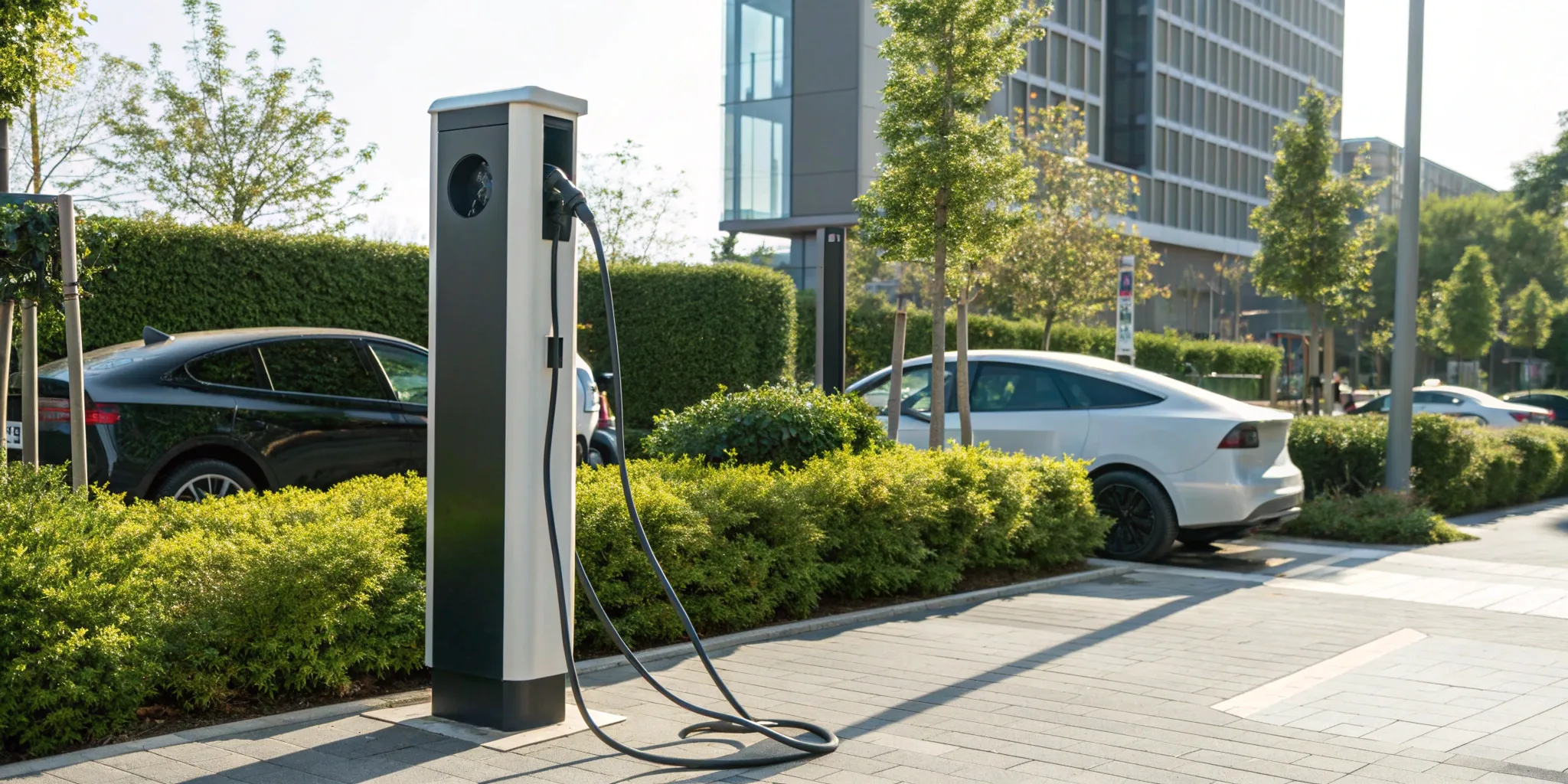
Think of your parking lot as more than just a place for cars—it’s an asset. A commercial EV charger installation transforms that space into a powerful tool for growth. This strategic move attracts high-value customers, increases your property value, and gives you a serious competitive edge. For many, offering charging is the new Wi-Fi; it’s a feature customers and employees now expect. The benefits are obvious, but the process can feel daunting. This guide simplifies the entire commercial EV charging station installation, walking you through everything from picking the right hardware to hiring the best contractor for the job.
Key Takeaways
- Select a Charger Based on Visitor Dwell Time: Your customers’ typical visit length is the best guide for choosing the right technology. Level 2 chargers are perfect for locations where people park for an hour or more, while DC Fast Chargers serve high-turnover spots that require a quick power-up.
- Prioritize a Professional Site Assessment: Before committing to a plan, have a qualified electrician evaluate your property’s electrical capacity. This crucial first step identifies necessary upgrades and helps you navigate complex permitting, preventing costly surprises and ensuring a safe, code-compliant installation.
- Leverage Incentives for a Stronger ROI: The upfront cost can be significantly reduced by combining federal tax credits, state grants, and utility rebates. This makes it easier to realize the long-term benefits, such as attracting new customers, increasing property value, and creating a new revenue stream.
What Types of Commercial EV Chargers Can You Install?
When you decide to install EV charging stations, one of the first things you’ll notice is that they aren’t all the same. Chargers are categorized into “levels” based on how quickly they can power up a vehicle. Understanding these levels is key to choosing the right setup for your property, budget, and the customers or employees you want to serve. Each type has its own ideal use case, from slow, overnight charging to a rapid power-up that gets drivers back on the road in minutes.
Choosing the right level depends entirely on your goals. Are you looking to offer a convenient perk for employees who are parked for eight hours? Or do you want to attract customers who need a quick charge while they shop? The power output, installation complexity, and cost vary significantly between levels. Let’s break down the three main types of commercial EV chargers so you can find the perfect fit for your business.
How Commercial Chargers Differ from Home Units
You might think a charger is just a charger, but commercial units are in a completely different league than the one you’d install in your garage. The biggest difference is power. Commercial chargers deliver a much faster charge, designed to get drivers back on the road quickly. They are also built to be incredibly durable, ready to handle constant use and harsh weather. Beyond their rugged exterior, these chargers are equipped with smart technology for processing payments, managing power usage, and remote monitoring. This allows you to set pricing and even generate a new stream of revenue for your business. Because of these advanced features and higher power requirements, the installation process is more involved and requires the expertise of a qualified electrician to handle the complex wiring and ensure everything is up to code.
Level 1 Chargers: Simple, Everyday Charging
Level 1 chargers are the most basic option available. They use a standard 120-volt outlet—the same kind you use to plug in a lamp or a laptop. Because of this, they offer the slowest charging speed, typically adding just two to five miles of range per hour. While they don’t require any special electrical work, their slow pace makes them less practical for most commercial settings. They are best suited for workplaces where employees park their cars for a full workday or for residential complexes where tenants can charge their vehicles overnight. For most businesses aiming to attract customers, a Level 1 charger won’t provide the quick turnaround drivers are looking for.
Level 2 Chargers: The Sweet Spot for Businesses
Level 2 chargers are the sweet spot for most commercial properties and are the most common type you’ll see in public spaces. They require a 240-volt outlet, similar to what an electric stove or dryer uses, and must be installed by a qualified electrician. These chargers are much faster than Level 1, adding about 10 to 75 miles of range per hour. This makes them a perfect fit for retail locations, restaurants, hotels, and offices—places where people will be parked for an hour or more. The installation is a more involved electrical project, but the result is a reliable and convenient amenity that can attract and retain customers and employees.
Level 3 (DC Fast) Chargers: For Quick Turnaround
If your business thrives on quick customer turnover, Level 3 chargers—also known as DC Fast Chargers—are the fastest option available. These are the powerhouses you typically find at highway rest stops, built for drivers who need to power up and get back on the road in minutes. A DC Fast Charger can add up to 150 miles of range in just 30 minutes, thanks to its high power output. This level of performance, however, requires a significant investment in both the equipment and the complex electrical upgrades needed to support it. While not all EVs are compatible with this technology, these chargers are a game-changer for high-traffic locations where speed is the main priority.
Typical Power Output and Charging Speed
So, how do these different levels translate to real-world charging times? The easiest way to decide is to think about how long your visitors typically stay. A Level 1 charger, using a standard 120-volt outlet, adds just 2-5 miles of range per hour, making it practical only for employees parked all day. The more versatile Level 2 charger provides a much more useful 10-75 miles of range per hour, ideal for customers at a store or restaurant. Finally, the Level 3 DC Fast Charger delivers the quickest power-up for drivers on the move. Each option serves a different need, and choosing the right one depends on matching the charging speed to your customer’s dwell time.
DC Fast Chargers: For a Quick Turnaround
Also known as Level 3 chargers, DC Fast Chargers are the most powerful and fastest option on the market. These units can charge a vehicle’s battery to 80% in as little as 20-30 minutes, adding up to 150 miles of range per hour. Because they provide such a rapid charge, they are ideal for locations where drivers need a quick stop, like highway rest areas, gas stations, and car dealerships. However, this speed comes at a price. DC Fast Chargers have significant power requirements and are the most expensive to install. It’s also important to know that not all electric vehicles are compatible with this type of charger, though most new models are.
Level 3 (DC Fast) Chargers: For Quick Turnaround
If your business thrives on quick customer turnover, Level 3 chargers—also known as DC Fast Chargers—are the fastest option available. These are the powerhouses you typically find at highway rest stops, built for drivers who need to power up and get back on the road in minutes. A DC Fast Charger can add up to 150 miles of range in just 30 minutes, thanks to its high power output. This level of performance, however, requires a significant investment in both the equipment and the complex electrical upgrades needed to support it. While not all EVs are compatible with this technology, these chargers are a game-changer for high-traffic locations where speed is the main priority.
Typical Power Output and Charging Speed
So, how do these different levels translate to real-world charging times? The easiest way to decide is to think about how long your visitors typically stay. A Level 1 charger, using a standard 120-volt outlet, adds just 2-5 miles of range per hour, making it practical only for employees parked all day. The more versatile Level 2 charger provides a much more useful 10-75 miles of range per hour, ideal for customers at a store or restaurant. Finally, the Level 3 DC Fast Charger delivers the quickest power-up for drivers on the move. Each option serves a different need, and choosing the right one depends on matching the charging speed to your customer’s dwell time.
How to Choose the Right EV Charger for Your Business
Picking the right EV charger for your business isn’t just about buying a piece of equipment; it’s about matching the technology to your customers’ needs and your property’s capabilities. The best choice for a retail complex with high turnover will be very different from what an office building needs for its employees. Thinking through a few key factors—like charging speed, power requirements, smart features, and location—will help you invest in a solution that adds real value for your customers and your business. A little planning now ensures your installation goes smoothly and delivers the results you’re looking for.
First, Pinpoint Your Charging Speed Needs
The first step is to think about how long your customers or employees typically stay at your location. This will help you decide on the right charging speed. Level 2 chargers are the most common for commercial use, providing about 25-40 miles of range per hour of charging. They are a perfect fit for workplaces, hotels, and apartment complexes where people park for several hours. On the other hand, DC Fast Chargers are built for speed, delivering 150-200 miles of range in about 30 minutes. These are ideal for locations where drivers need a quick top-up, like retail stores, restaurants, and rest stops along busy roads. Matching the charger type to your visitors’ dwell time is key to providing a useful amenity.
Understand the Power and Tech Specs
Before you can install any chargers, you need to know if your building’s electrical system can handle the load. EV chargers, especially multiple units or DC Fast Chargers, draw a significant amount of power. A professional site assessment is crucial to determine your current capacity. In many cases, your property may need electrical system upgrades, such as a new electrical panel, dedicated circuits, or even a transformer upgrade, to support the new equipment safely. Working with a qualified electrician from the start will help you identify these requirements early on, preventing unexpected costs and delays down the road. This ensures your installation is not only functional but also safe and compliant with all electrical codes.
Prioritizing Durability and Weather Resistance
Your commercial EV charger is a long-term investment that will live outdoors, so it needs to be tough. These units have to withstand everything from blazing summer heat to freezing rain and snow, all while being exposed to potential bumps and scrapes from vehicles. When selecting a model, look for features that signal durability, such as all-steel construction and weather-resistant ratings like NEMA 3R, which protects against rain, sleet, and ice. A robust charger isn’t just about surviving the elements; it’s about providing a reliable service that reflects well on your business. Choosing a high-quality, resilient unit minimizes downtime and repair costs, ensuring it remains a dependable amenity for your customers and employees for years to come.
Compare Smart Features and Payment Options
Modern commercial EV chargers are more than just power outlets; they are smart, connected devices. You’ll want to choose chargers with networking capabilities, typically through Wi-Fi or a cellular connection. This connectivity allows you to manage your stations remotely, track usage data, set pricing, and receive software updates. It also gives you control over who can use the chargers and when. Think about how you want to handle payments. Options range from simple credit card readers to mobile apps and RFID cards. Choosing a system with flexible payment and management features will make it easier to operate your stations and potentially turn them into a new source of revenue for your business.
Exploring Advanced Features like Power Sharing
If you plan on installing several charging stations, you’ll want to look into a feature called power sharing. This smart technology allows a group of chargers to operate on a single electrical circuit, intelligently distributing the available power among the vehicles that are plugged in. It’s a fantastic way to maximize your existing infrastructure and can often reduce the need for costly electrical upgrades. As experts at BTC Power point out, dynamic power sharing helps spread energy efficiently across multiple spots, which saves money and reduces strain on the electrical grid. This feature, combined with other smart capabilities like remote management software and flexible payment options, gives you greater control over your investment and ensures your charging stations operate effectively. Properly integrating these advanced systems requires careful planning to ensure your electrical setup can handle the demand safely.
Map Out Your Ideal Charger Location
Where you place your charging stations is just as important as which model you choose. The ideal location is highly visible, clearly marked, and easy for drivers to access without disrupting traffic flow. Consider placing them in premium parking spots near your building’s entrance to make them a convenient and attractive amenity. You’ll also need to account for practical details like cable length, lighting for nighttime safety, and ADA compliance to ensure the spaces are accessible to all drivers. Proper site planning not only creates a better user experience but also helps maximize the visibility and usage of your new chargers.
Evaluating Charger Uptime and Efficiency
A charger that’s frequently out of service is more of a liability than an asset. It frustrates drivers and reflects poorly on your business. When you’re looking at different models, ask about their uptime statistics. The best systems on the market achieve 98% uptime, meaning they are reliable and ready to use nearly all the time. This level of dependability doesn’t happen by accident; it’s the result of quality hardware combined with a professional installation. To keep your stations running smoothly, it’s also important to have a plan for ongoing maintenance and prompt electrical repairs, ensuring any issues are addressed quickly before they can impact your customers.
Future-Proofing Your Investment
The world of electric vehicles is changing fast, with new technology and standards emerging all the time. Installing EV chargers is a significant investment, so you want to make sure your equipment won’t become obsolete in just a few years. Future-proofing is all about making smart choices today that will allow you to adapt to tomorrow’s needs without having to start from scratch. This means thinking beyond your immediate requirements and considering how your business might grow and how EV technology will evolve. By planning for scalability and choosing adaptable hardware, you can protect your investment and ensure your charging stations remain a valuable asset for years to come.
Planning for Scalability and Future Growth
It’s likely that the demand for EV charging at your property will only increase over time. That’s why it’s wise to plan for future expansion from day one. A forward-thinking installation involves more than just setting up the chargers you need right now. It means laying the groundwork for additional units later by running extra conduit or installing an electrical panel with spare capacity. You should also consider the physical layout of your parking area, ensuring there’s enough space to add more stations and manage vehicle traffic effectively. A qualified electrician can help you design a scalable system that makes future upgrades simpler and more cost-effective.
Adapting to New Charging Standards
EV technology isn’t just about more cars; it’s also about better, faster charging. New standards for connectors, like Tesla’s NACS plug, are becoming more common, and power levels are constantly increasing. To keep up, look for chargers that are designed to be adaptable. The best models can be updated with new software to support different charging protocols or are built with modular components that allow for hardware upgrades, like swapping out a connector or increasing power output. Choosing a charger that can evolve ensures you can continue to serve all types of electric vehicles and offer the latest technology without a complete overhaul of your system. This flexibility is key to a long-lasting and successful EV charging program.
What Does a Commercial EV Charger Installation Cost?
Let’s talk about the numbers. Understanding the full financial picture of installing commercial EV chargers is key to making a smart investment. The final price tag isn’t just about the hardware; it’s a combination of the charger itself, professional installation, any necessary electrical upgrades to your property, and the ongoing costs to keep everything running smoothly. Think of it as a complete project budget rather than a single purchase.
The type of charger you choose will be the biggest factor influencing your initial costs. A Level 2 charger, which is perfect for workplaces or retail locations where cars will be parked for a few hours, has a very different price point than a DC Fast Charger designed for quick, on-the-go stops. Beyond the charger, your building’s current electrical capacity plays a huge role. If your system needs an upgrade to handle the extra load, that will add to the upfront investment. Planning for these variables from the start will help you create a realistic budget and avoid surprises down the road.
Costs for a Level 2 Charger Installation
For many businesses, a Level 2 charger is the sweet spot between performance and price. The cost to install a commercial Level 2 charging station typically falls between $6,000 and $15,000 per charger. This estimate generally covers both the charging unit and the labor for a standard installation. Because they offer a reliable charging speed for employees or customers who will be parked for an hour or more, they are an accessible and popular choice for offices, retail centers, and multi-family residential buildings looking to provide a valuable amenity without a massive upfront investment.
Costs for a DC Fast Charger Installation
If your goal is to offer rapid charging for vehicles on the move—think locations near major highways or for commercial fleets—then a DC Fast Charger is what you need. However, this advanced technology comes with a much higher price tag. The installation of a single DC Fast Charger can range from $80,000 to $250,000 or more. This significant cost reflects the complex hardware, software, and the substantial electrical infrastructure required to deliver such high-power charging safely and efficiently. It’s a major investment best suited for businesses aiming to attract high-turnover traffic.
Don’t Forget Site Preparation Costs
When you’re budgeting for your EV charging station, it’s easy to focus on the price of the charger itself, but that’s only one piece of the puzzle. Site preparation costs can significantly add to your total investment. For instance, your building’s current electrical system might not be equipped to handle the extra demand. This could mean you’ll need significant electrical upgrades, like new panels or high-capacity wiring, just to support the new chargers. If you’re installing chargers outdoors, you’ll also need to factor in the cost of trenching for underground cables, pouring concrete bases, and installing protective posts to keep the equipment safe. Thinking about these factors from the start helps you build a realistic budget and ensures your project runs smoothly.
Will You Need Electrical System Upgrades?
One of the most common hurdles in a commercial EV charger project is discovering that the building’s existing electrical system can’t handle the new demand. Many properties, especially older ones, require significant electrical system upgrades to support even one charger, let alone a bank of them. This could involve installing new, larger electrical panels, upgrading transformers, or running new conduits. It’s essential to have a qualified electrician assess your site early on to identify what upgrades are needed so you can factor these costs into your overall budget from the beginning.
Budgeting for Ongoing Maintenance and Operations
Your financial planning shouldn’t stop once the chargers are installed. To protect your investment and ensure a great user experience, you’ll need to budget for ongoing maintenance and operations. This includes routine inspections and cleaning to keep the hardware in top shape, as well as periodic software and firmware updates to maintain security and functionality. Just like any other critical equipment, consistent preventive maintenance is essential for maximizing the lifespan and performance of your charging stations and keeping your customers happy.
What Are the Electrical Requirements for EV Chargers?
Installing a commercial EV charger is more involved than just plugging in a new appliance. It’s a significant electrical project that requires careful planning to ensure safety, reliability, and compliance with local codes. Before you can offer charging to customers or employees, your building’s electrical system needs to be ready for the added demand. Think of it as adding a new, power-hungry wing to your building—you need to make sure the foundation can support it.
Working with a qualified electrical contractor is essential. They will assess your current infrastructure, identify necessary upgrades, and make sure every wire and connection is up to code. Let’s break down the key electrical requirements you’ll need to consider for a successful and safe installation.
Do You Have Enough Power? Assessing Your Site
The very first step is to determine if your current electrical system can handle the load of one or more EV chargers. A licensed electrician will perform a load calculation to evaluate your building’s existing electrical panel, wiring, and overall service capacity. For many businesses, the electrical system often needs big upgrades like new panels or transformers to handle the power needed for multiple chargers. This assessment is critical because adding chargers without confirming your capacity can lead to overloaded circuits, tripped breakers, and potential safety hazards. It’s all about making sure you have enough power to go around without disrupting your daily operations.
When to Plan for Electrical Panel Upgrades
If the initial assessment shows your system isn’t quite ready, don’t worry. This is a common scenario, and there are clear solutions. You might need to upgrade your power setup to accommodate the new chargers. This could involve installing a larger electrical panel with more capacity, running new, dedicated circuits for each charging station, or even increasing your main electrical service from the utility company. Planning for these upgrades early in the process helps streamline the installation and prevents unexpected costs and delays. An experienced contractor can manage these changes efficiently, ensuring your system is robust enough for your new charging stations.
How to Meet Safety and Code Requirements
Safety is the top priority in any electrical project, and EV charger installations are no exception. Every installation must follow strict local codes and National Electrical Code (NEC) guidelines. These regulations cover everything from the size of the wiring to the type of circuit breakers used, all designed to prevent electrical hazards. Your installation team must be well-versed in these requirements to ensure conductors can handle any possible electrical load. Working with a licensed electrician who understands the specific permit and inspection processes in your service area is non-negotiable. This guarantees your charging stations are not only effective but also completely safe for your property, employees, and customers.
Finding Rebates and Incentives for Your EV Charger Installation
One of the best parts about installing commercial EV chargers is that you often don’t have to cover the entire cost on your own. A variety of federal, state, and local programs are available to make the investment more affordable for businesses like yours. These incentives are designed to encourage the switch to electric vehicles, and taking advantage of them can significantly reduce your upfront expenses.
Navigating these programs can feel a bit overwhelming, but a qualified electrical contractor can be a huge help in identifying the opportunities that fit your project. Think of these rebates and credits as a financial thank-you for supporting a cleaner transportation future. By layering different incentives, you can make your EV charging station installation a smart and cost-effective move for your business. It’s worth taking the time to explore what’s available before you get started.
Tapping into Federal Tax Credits and Programs
The federal government offers some powerful incentives to help businesses invest in EV infrastructure. The most notable is the Alternative Fuel Vehicle Refueling Property Credit, also known as Section 30C. This tax credit allows you to claim a percentage of your total project cost, up to a maximum of $100,000.
Currently, the credit is for 6% of the cost. However, if your project meets specific wage and apprenticeship requirements, that credit jumps to 30%. This can make a massive difference in your budget. It’s a direct way to lower your tax liability and recover a substantial portion of your installation expenses. Keep in mind that programs like this can change, so it’s always a good idea to confirm the latest details with your tax professional.
Understanding Section 30C Requirements
The key to the Section 30C tax credit is its two-tiered structure. While the base credit is 6% of your project cost, you can increase that to a much more substantial 30% by meeting specific prevailing wage and apprenticeship requirements. That jump from 6% to 30% can make a massive difference in your budget, directly lowering your tax liability and helping you recover a significant portion of your installation expenses. Working with an experienced contractor who understands these labor standards is essential for making sure you qualify for the maximum credit available.
Exploring the National Electric Vehicle Infrastructure (NEVI) Program
Beyond tax credits, keep an eye on large-scale grant programs like the National Electric Vehicle Infrastructure (NEVI) Program. This federal initiative aims to build a reliable public charging network along major highways. For projects that qualify, the NEVI program can cover up to 80% of the costs—a true game-changer for businesses in prime locations. While federal funding can sometimes be paused for review, it’s a program worth watching. The biggest takeaway here is that combining incentives from federal, state, and local utility programs is the smartest way to lower the overall cost of your commercial EV charging station project.
Exploring State and Local Incentive Programs
Beyond federal credits, Pennsylvania offers its own set of programs to support businesses going electric. The state is actively encouraging EV adoption, and you can often find grants and rebates through various state-level initiatives. For example, the Driving PA Forward program frequently offers funding for Level 2 EV charging projects.
These programs are competitive and often have specific application windows, so it’s smart to stay informed about deadlines. We can help you identify which state and local incentives apply to your project in Chester, Montgomery, Bucks, or Delaware County. Checking with your state energy office or local municipality is a great first step, as they can provide the most current information on available funding to help get your project off the ground.
Check for Rebates from Your Utility Company
Don’t forget to check with your local utility provider. Companies like PECO often have their own rebate programs for commercial customers installing EV charging stations. Utilities are invested in building a stable and efficient grid, and they see business-owned charging stations as a key part of that future. They may offer rebates for purchasing specific types of hardware or for the installation itself.
These rebates can often be stacked with federal and state incentives, allowing you to maximize your savings. The process usually involves a straightforward application, and the rebate might come as a check or a credit on your bill. As your local electrical experts, we’re familiar with the programs in our service area and can guide you toward the right resources to lower your overall project cost.
Leveraging Tax Deductions and Capital Allowances
Beyond the direct savings from rebates and tax credits, your EV charger installation can provide additional financial benefits through tax deductions. Because the charging station is a piece of business equipment, you can recover its cost over time through depreciation. This allows you to deduct a portion of the asset’s value from your taxable income each year. Even better, you may be able to use accelerated depreciation methods, like the Section 179 deduction, to write off a larger portion of the cost in the first year of service. When you combine these powerful deductions with the available tax credits, the financial case for installing EV chargers becomes even more compelling. A conversation with your tax professional can help you map out the best strategy for your business.
Your Commercial EV Charging Station Installation: A Step-by-Step Guide
Installing commercial EV charging stations is a multi-step project, but it doesn’t have to be complicated. When you work with an experienced electrical contractor, they’ll manage the entire process from start to finish. Understanding the key stages can help you know what’s happening on your property and why. From the initial site walk-through to the final testing, each step is designed to ensure your new chargers are safe, compliant, and ready to use.
The process generally follows four main phases: planning the layout, securing the right permits, upgrading your electrical system, and finally, installing and testing the hardware. Let’s walk through what each of these steps involves.
Step 1: Assess and Plan Your Site
Before any work begins, the first step is a thorough site assessment. A professional electrician will visit your property to map out the best installation plan. During this visit, they will evaluate your current electrical capacity, identify the ideal locations for the chargers, and determine the most efficient routes for wiring and trenching. This is also when they’ll discuss your specific needs, like the number and type of chargers you want, to provide an accurate cost estimate. This initial planning is crucial for a smooth project, ensuring that the final setup meets your business goals and is convenient for your customers or employees.
Step 2: Plan, Permit, and Prepare
Once the site assessment is complete, the project moves into the planning and permitting stage. This is a critical step where your contractor will finalize the layout, select the equipment, and handle all the necessary paperwork to get approval from your local municipality. Securing the right permits ensures your installation is fully compliant with all building and electrical codes, which prevents legal headaches and project delays. This phase is all about laying the proper groundwork, both on paper and on your property, to ensure a smooth and successful installation process from start to finish.
Project Timelines: From Assessment to Activation
Understanding the timeline for your installation helps set clear expectations right from the start. The entire process, from our first visit to the final activation, is a structured project with several key phases. The exact duration can vary depending on factors like how quickly permits are approved and the extent of any electrical work needed for your property. However, the project will always follow a clear path designed to keep things on track and avoid unnecessary delays. Understanding these stages makes the whole experience smoother and more predictable for you.
After the initial site assessment, we move into detailed planning and securing the necessary permits to ensure your project complies with all local regulations. If your property needs more power, this is when any required electrical system upgrades are scheduled and completed. Once the permits are in hand and the electrical groundwork is finished, the physical installation of the chargers begins. The final step is thorough testing to confirm everything is working safely and efficiently before your new stations are activated and ready for drivers.
Step 2: Handle Permits and Approvals
Once the plan is set, the next phase involves handling all the necessary paperwork. Installing commercial EV chargers requires permits from local authorities to ensure the project complies with all building codes, safety regulations, and zoning laws. A qualified contractor will manage the entire permit application process for you. They’ll work directly with municipal offices and utility companies in your service area to secure all required approvals. This step prevents legal headaches down the road and confirms that your installation is officially up to code, safe, and ready for public use.
Step 3: Set Up Your Electrical Infrastructure
With permits in hand, the real electrical work can begin. Your property’s existing electrical system may need significant upgrades to handle the increased load from multiple EV chargers. This often involves installing new, dedicated circuits, upgrading your main electrical panel, or even adding a new transformer to supply enough power. Our team of skilled electricians handles all aspects of these electrical installations, ensuring your infrastructure can safely and reliably support your new charging stations without disrupting your daily business operations. This foundational work is key to the long-term performance of your chargers.
Step 4: Install and Test Your Chargers
This is the final and most exciting step. After the supporting electrical work is complete, the technicians will mount the EV charging stations, connect them to the new power supply, and complete all the final wiring. Once everything is physically installed, the system undergoes rigorous testing. Each charger is commissioned and tested to confirm it’s operating correctly, communicating with the network, and meeting all safety standards. This final quality check ensures that when you flip the switch, your chargers are fully functional, safe, and ready to provide a seamless experience for every driver.
Typical Installation Timeframes
The timeline for a commercial EV charger installation can vary quite a bit, depending on the project’s complexity. The longest phase is often not the physical work but the behind-the-scenes planning and permitting, which can take several weeks to a few months. Once all approvals are in place, the on-site work moves much more quickly. A straightforward installation of a single Level 2 charger might only take a few days. However, a larger project involving multiple chargers, significant trenching, or major electrical upgrades could extend the physical installation to a week or more. DC Fast Chargers, with their substantial power requirements, represent the most complex projects and can take several weeks to complete. An experienced contractor will manage this entire schedule, keeping you informed from the initial permit application to the final system test.
Common Installation Challenges (And How to Handle Them)
Installing a commercial EV charging station is an exciting step for any business, but let’s be real—it’s a construction project. And like any project, it can come with a few bumps in the road. From navigating your building’s existing electrical system to dealing with local permits, challenges can pop up. The key isn’t to avoid them entirely (that’s nearly impossible) but to anticipate them and have a solid plan in place.
The good news is that you don’t have to figure this out alone. Working with an experienced electrical contractor who knows the ins and outs of commercial installations can make all the difference. They’ve seen it all before and can guide you through the process, turning potential headaches into simple checklist items. Let’s walk through some of the most common challenges and, more importantly, how to handle them so your installation goes off without a hitch.
What If Your Electrical System Isn’t Ready?
One of the first things to consider is whether your current electrical system can handle the new load. Adding one or more EV chargers, especially powerful DC Fast Chargers, is a significant power draw. Often, a building’s electrical system needs upgrades like new panels or transformers to support the chargers safely and effectively. This isn’t a DIY situation; it requires a professional assessment to determine exactly what your property needs. An experienced electrician can perform a load calculation and map out the necessary electrical repairs or upgrades, ensuring your system is robust, safe, and ready for the future.
How to Speed Up the Permitting Process
Before any wiring can be done, you’ll need to secure the right permits from your local municipality. The permitting process can be complex, involving detailed plans, compliance with local codes, and inspections. Each township in Chester, Montgomery, Bucks, and Delaware County has its own set of rules and timelines, which can be tricky to manage if you’re not familiar with them. The best way to handle this is to partner with a local contractor who has experience in your specific service area. They understand the local requirements and can manage the entire application and approval process for you, saving you time and preventing frustrating delays.
Solving Common Site Planning Issues
Where you place your chargers matters—a lot. You need to think about visibility for customers, accessibility, and compliance with regulations like the Americans with Disabilities Act (ADA). You also have to consider traffic flow and how the chargers will integrate with your existing parking layout. A thorough site plan is crucial. This involves consulting local codes and National Electrical Code (NEC) guidelines to ensure everything is sized and placed correctly. A qualified contractor will help you think through these details, from the best location for trenching to the most convenient spot for drivers, ensuring your station is both functional and safe.
Keeping Your Installation Costs on Budget
The cost of installation is a valid concern for any business owner. While it’s true that the initial investment can be significant, it’s important to look at the bigger picture. Many businesses find that the long-term benefits, like attracting new customers and potential revenue from charging fees, can offset these upfront expenses. To make the initial investment more manageable, look into available rebates and incentives. Additionally, some contractors offer financing options that can help spread out the cost. Thinking of it as a long-term investment in your property and brand can help frame the decision in a more strategic light.
Common Mistakes to Avoid During Planning
When planning your EV charger installation, a few common missteps can lead to unexpected costs and delays. The most frequent oversight is underestimating your property’s electrical needs. Many businesses, especially those in older buildings, discover late in the process that their existing system can’t handle the new demand, requiring significant and unbudgeted electrical system upgrades. This is why skipping a professional site assessment is a critical error. A qualified electrician can identify these capacity issues from day one, ensuring a safe, code-compliant installation. Another mistake is failing to plan for future growth. Choosing the cheapest charger or installing too few units might save money now, but it can be a costly decision when you need to scale up later. A thoughtful plan considers not just your immediate needs but also where your business will be in five years.
Why Should Your Business Install EV Charging Stations?
Installing commercial EV charging stations is more than just providing a convenient perk; it’s a strategic investment that can deliver significant returns. From attracting new customers to enhancing your brand’s reputation, adding EV chargers to your property is a powerful way to future-proof your business. It signals that you’re forward-thinking and ready to meet the needs of a growing market. Let’s look at the key benefits of making this smart upgrade.
Keeping Pace with EV Market Growth
The shift to electric vehicles is happening faster than many people realize, and for many businesses, offering charging is becoming the new Wi-Fi—a must-have feature that customers simply expect. Global electric vehicle sales are skyrocketing, signaling a permanent change in how people get around. This isn’t just a trend; it’s the new standard. As more EVs hit the road, the demand for convenient charging locations will only grow, especially among younger customers who prioritize sustainability. By installing charging stations now, you position your business as a forward-thinking leader and ensure you’re ready to meet the expectations of this rapidly expanding market, staying relevant and competitive for years to come.
Attract High-Value Customers and Create New Revenue
One of the most immediate benefits of installing EV chargers is the ability to draw in a new, high-value customer base. EV drivers actively seek out businesses that offer charging, and they often plan their trips and shopping around these locations. While their vehicles charge, these customers are likely to spend more time—and more money—at your establishment. This extended dwell time translates directly into increased sales. Beyond that, you can create a new revenue stream by setting charging fees, turning your parking lot into a profit center. A professional commercial electrical installation ensures your system is set up safely and efficiently to handle this new demand.
Understanding Potential Revenue Sharing Models
Beyond attracting more foot traffic, your EV chargers can become a direct source of income. Modern charging stations give you the flexibility to set your own pricing structure. You could charge drivers per kilowatt-hour of energy used, a flat fee per charging session, or an hourly rate for the time they’re plugged in. These smart systems, often managed through a simple software dashboard, handle all the payment processing for you. This transforms a standard parking spot into an asset that generates revenue, helping you achieve a faster return on your investment. A proper electrical installation ensures these networked features are configured correctly from day one.
Increase Your Property’s Value and Appeal
Adding EV charging stations is a tangible upgrade that can increase the value and appeal of your commercial property. For property managers and building owners, chargers are a powerful amenity that attracts and retains high-quality tenants. In a competitive market, having on-site charging can be the deciding factor for a prospective lessee. It shows that your property is modern, well-equipped, and prepared for the future of transportation. This investment not only makes your property more desirable today but also positions it for long-term appreciation as the demand for electric vehicles continues to grow.
Get Ahead of Competitors and Support Your Team
In today’s job market, top talent looks for employers who offer modern benefits and demonstrate a commitment to sustainability. Offering workplace charging is a highly sought-after perk that can make your business stand out. In fact, studies show that the vast majority of employers with EV charging say it helps them attract and retain employees. It’s a clear signal that you support your team’s lifestyle choices and are invested in their convenience. This simple addition can give you a significant advantage over competitors, both in hiring and in attracting customers who see you as a leader in your industry.
Using EV Charging to Attract and Retain Talent
Workplace charging is quickly becoming a non-negotiable perk for top talent. As more of your current and future employees switch to electric vehicles, the ability to charge at work becomes a major convenience that can set your company apart. It’s not just a hunch—a staggering 80% of employers with charging stations report that this amenity helps them attract and keep valuable team members. It’s a tangible benefit that shows you support your staff’s lifestyle choices and are committed to sustainability. By offering on-site charging, you’re not just providing power for their cars; you’re investing in employee satisfaction and building a reputation as a forward-thinking employer.
Build Your Brand as a Green Leader
Installing EV chargers is a visible and impactful way to demonstrate your company’s commitment to sustainability. It’s a tangible action that speaks louder than words, showing customers, employees, and the community that you are serious about reducing your carbon footprint. This move can significantly enhance your brand image, aligning your business with the values of environmentally conscious consumers. By partnering with a team of trusted local electricians, you can ensure your installation is done right, making your green initiative a seamless and successful reality. This public display of corporate responsibility can build customer loyalty and set you apart as a forward-thinking leader.
Attracting Sustainability-Minded Consumers
Today’s consumers are more conscious than ever about where they spend their money, often choosing businesses that align with their own values. Installing EV chargers is a visible and impactful way to demonstrate your company’s commitment to sustainability. It’s a tangible action that speaks louder than words, showing customers, employees, and the community that you are serious about reducing your carbon footprint. This simple upgrade can significantly enhance your brand image, building loyalty among environmentally aware consumers and setting you apart as a forward-thinking leader in your industry.
Staying Ahead of Local Regulations
Navigating the world of permits and building codes can feel like a major hurdle, but it’s a standard part of any commercial electrical project. Installing commercial EV chargers requires permits from local authorities to ensure the project complies with all building codes, safety regulations, and zoning laws. A qualified contractor will manage the entire permit application process for you. By partnering with a local expert who is familiar with the specific requirements in your service area, you can avoid delays and ensure your installation is fully compliant from day one, letting you focus on your business while the experts handle the red tape.
Expanding Beyond Retail: Other Commercial Use Cases
While retail stores and restaurants are common spots for EV chargers, the need extends far beyond customer-facing businesses. Many types of commercial operations are now integrating EV technology. Think of freight companies electrifying their truck fleets, warehouses using electric forklifts, or municipalities transitioning to EV buses. These applications require robust, reliable charging infrastructure to keep operations running smoothly. Handling these large-scale commercial installations requires specialized expertise to manage the significant power demands and ensure long-term performance, making it a critical investment for the future of logistics, transport, and public services.
How to Maintain Your EV Charging Stations
Installing your EV charging stations is a huge step, but the work doesn’t stop there. To get the most out of your investment, you need a solid plan for ongoing maintenance. Keeping your chargers in top condition ensures they’re always ready for customers, minimizes downtime, and protects your revenue stream. A well-maintained station not only functions better but also reflects positively on your business, encouraging drivers to return.
Think of it like any other critical piece of equipment at your facility. Regular check-ups and proactive care prevent small issues from turning into costly problems. By staying on top of maintenance, you create a reliable and safe experience for every user. Here’s how you can keep your EV charging stations running smoothly for years to come.
Keep an Eye on Charger Performance
The best way to catch problems early is to keep a close eye on your charging stations. Regular inspections are essential to make sure everything is functioning properly. This proactive approach helps you identify any issues before they become significant headaches, maintaining operational efficiency and keeping downtime to a minimum.
Check for physical damage to the chargers and cables, ensure the station is clean, and test the user interface. Many modern charging systems also come with software that allows you to monitor performance remotely. If you notice any recurring errors or a drop in performance, it’s time to call in a professional for electrician repairs before it impacts your customers.
Schedule Regular Maintenance to Prevent Downtime
Just like your car, your EV chargers need routine service to perform at their best. Scheduling preventive maintenance with a qualified electrical contractor can save you from unexpected breakdowns. A technician can inspect internal components, test connections, and ensure everything is up to code. This is also the perfect time to handle any necessary software and firmware updates.
Keeping your station’s software current is crucial for performance and security. These updates often include patches for vulnerabilities, new features, and compatibility improvements that enhance the user experience. A consistent maintenance schedule is the easiest way to protect your investment and keep your chargers operating safely and efficiently.
Ensure a Smooth Charging Experience for Drivers
A reliable charger is only part of the equation. The overall experience you provide will determine whether drivers come back. Make sure the area around your stations is well-lit, clean, and safe. Clear signage and simple instructions can make the charging process much easier for first-time users.
Think about what would make the experience better. Is there a comfortable place for drivers to wait? Is the payment system straightforward? Addressing maintenance, safety, and usability in your plan ensures your charging station remains a valuable asset. A positive customer experience can lead to great reviews, increased usage, and stronger customer loyalty.
Use Data to Set the Right Price
Your EV charging stations don’t just provide a service—they generate valuable data. Use the analytics from your charging network to understand how and when your stations are being used. This information can help you spot trends, identify peak hours, and make informed decisions about your pricing strategy.
For example, you might offer lower rates during off-peak hours to encourage more usage or implement session fees to prevent drivers from leaving their cars parked after charging is complete. Businesses often find that EV drivers stay longer and spend more money on-site. By analyzing the data, you can fine-tune your pricing to maximize profitability and better serve your customers.
How to Choose the Right Electrical Contractor
Installing a commercial EV charging station is a significant electrical project, and your choice of contractor can make all the difference. This isn’t a job for a general handyman or an electrician without specific, relevant experience. The right partner will ensure your installation is safe, efficient, and compliant with all regulations, protecting your investment and your property.
When you start vetting potential contractors, you’re looking for more than just a good quote. You need a team with proven experience in commercial EV projects, the right licenses and certifications to do the work legally and safely, and deep knowledge of local permitting processes. Finding a contractor who checks all three boxes is the key to a smooth installation process from start to finish. A qualified team will handle the technical details so you can focus on the benefits of offering EV charging to your customers and employees.
Find a Contractor with Proven EV Experience
Not all electrical work is created equal. A commercial EV charging installation involves unique challenges, from assessing your site’s power capacity to understanding the specific needs of your users. That’s why it’s critical to find an electrical contractor with a portfolio of successful commercial EV projects. An experienced team knows to consult local codes and National Electrical Code (NEC) guidelines to size the electrical conductors properly, ensuring they can handle any potential load without issue.
An experienced contractor does more than just install the hardware. They can help you plan the best location for your chargers, recommend the right type of charger for your business, and anticipate potential hurdles before they become costly problems. This kind of foresight comes only from hands-on experience with similar commercial electrical projects.
Always Verify Their Licenses and Certifications
This step is non-negotiable. Any contractor you consider must have the proper licenses and certifications to perform electrical system upgrades in Pennsylvania. This isn’t just about following the rules; it’s about ensuring the safety of your property, your employees, and your customers. Working with an unlicensed contractor can void your insurance, lead to failed inspections, and create serious safety hazards.
A professional and trustworthy company will be upfront about their credentials and happy to provide proof of their licensing and insurance. Verifying these details protects your business from liability and gives you peace of mind that the work is being done to the highest safety standards. When you work with a qualified team, you can be confident that your installation is both compliant and built to last.
Choose a Partner Who Knows Local Permitting
The permitting process can often be the most frustrating part of any construction project. Each township and county has its own set of rules, applications, and inspection requirements. A contractor with deep local knowledge can be your greatest asset in getting through these administrative hurdles without delays. They understand the specific requirements in places like Chester, Montgomery, Bucks, and Delaware Counties.
Partnering with a contractor who has local permit expertise streamlines the entire installation. They know who to call, what paperwork to file, and how to prepare for inspections. This local insight is invaluable, as it helps avoid common pitfalls that can stall a project for weeks or even months. By choosing a team familiar with the local service areas, you can keep your project on schedule and on budget.
Related Articles
Frequently Asked Questions
How long does the entire installation process usually take from start to finish? The timeline can vary quite a bit depending on the project’s complexity, but a typical commercial installation can take anywhere from a few weeks to a few months. The biggest factors that influence the schedule are the local permitting process and any necessary coordination with your utility company for electrical upgrades. A thorough site assessment at the beginning will give you a much clearer and more personalized timeline.
My building is older. Does that automatically mean I’ll need expensive electrical upgrades? Not necessarily, but it is a strong possibility. Many older properties were not built to handle the power demands of modern EV chargers. The only way to know for sure is to have a licensed electrician perform a load calculation and site assessment. Even if upgrades are needed, it’s a very common part of the process and a good contractor can plan the work efficiently to support your new chargers safely.
Can I start with just one or two chargers and add more later? Absolutely. Starting with a smaller number of chargers is a smart and popular strategy. The key is to plan for future growth from the beginning. During your initial installation, a good contractor can help you lay the groundwork—like installing sufficient conduit or a large enough electrical panel—so that adding more stations down the road is simpler and more cost-effective.
Do I have to charge drivers to use the stations, or can I offer it for free? This is completely up to you and depends on your business goals. Offering free charging can be a powerful tool to attract customers and reward employees, treating it as a valuable amenity. Alternatively, setting a fee for charging can help you recover installation and electricity costs, and even create a new source of revenue for your business. Modern networked chargers make it easy to set and adjust pricing as you see fit.
How much maintenance do these chargers really need after they’re installed? EV chargers are quite durable, but they aren’t “set it and forget it.” You should plan on simple, routine care, like keeping the units and cables clean and doing quick visual inspections for any damage. We also recommend scheduling an annual preventive maintenance check with a qualified electrician to inspect the internal components and ensure everything is working safely. This proactive approach is the best way to ensure reliability and protect your investment.