
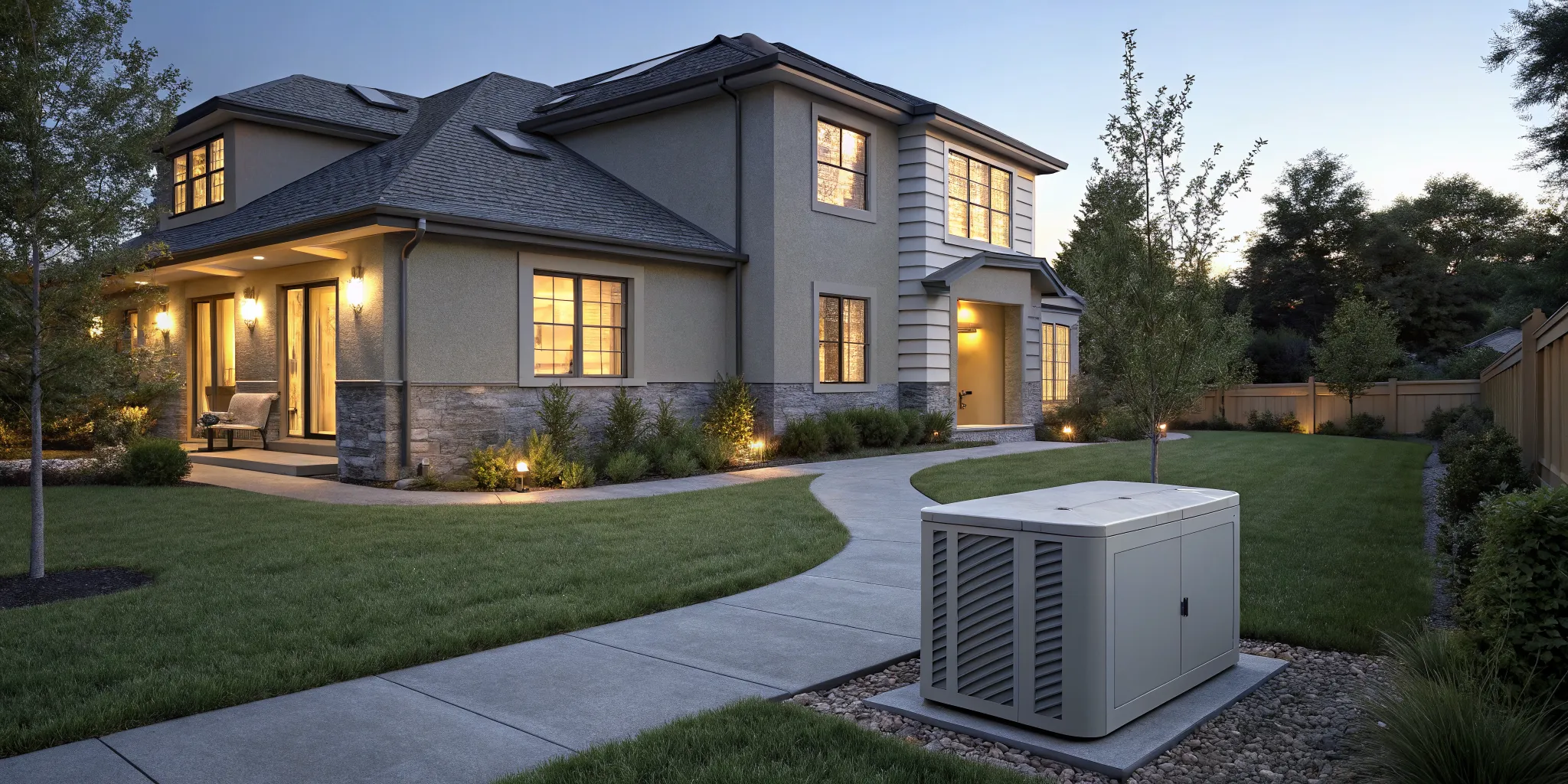
A home generator is a significant investment in your comfort and security. Like any major home improvement, making the right choice from the start saves you from future headaches and expenses. The most common and costly mistake is choosing the wrong size. Go too small, and your generator won’t be able to handle the startup surge from your air conditioner or well pump. Go too big, and you’ve spent money on power you’ll never use. Answering “what size generator do I need for my house?” is the single most important step. This guide is designed to help you avoid those common pitfalls by showing you how to accurately assess your needs for a smart, long-term solution.
Key Takeaways
- Distinguish Between Running and Starting Watts: Your generator must handle both the continuous power appliances use (running watts) and the initial surge needed to start motors in items like refrigerators or AC units (starting watts), which is often much higher.
- Choose a Size That Includes a Buffer: Select a generator that exceeds your calculated needs by at least 20%. This safety margin prevents strain on the unit and provides flexibility for future power needs, ensuring your generator runs reliably for years.
- Professional Installation Guarantees Safe, Automatic Power: A standby generator requires expert installation to safely connect to your home’s electrical and fuel systems. A certified technician ensures the system meets all local codes and properly installs the automatic transfer switch for seamless, safe operation during an outage.
Running Watts vs. Starting Watts: What’s the Difference?
When you start looking at generators, you’ll see two terms pop up constantly: running watts and starting watts. Think of it like this: a sprinter uses a huge burst of energy to get off the starting blocks but needs less energy to maintain their pace during the race. Your appliances work in a similar way. Understanding the difference between these two measurements is the key to choosing a generator that can handle your home’s demands without skipping a beat during a power outage.
Getting this right is about more than just convenience; it’s about safety and protecting your investment. A generator that’s too small will struggle and trip its circuit breaker, leaving you in the dark when you need power most. It can also damage the generator and your appliances. On the other hand, an oversized generator is less fuel-efficient and costs more than you need to spend. Both running and starting watts are critical pieces of the puzzle when sizing your system. Let’s break down what each one means for you and your home so you can make a confident choice.
Running Watts: The Constant Power You Need
Running watts, sometimes called rated watts, are the continuous power your appliances need to operate after they’ve started up. This is the steady energy required to keep your lights on, your refrigerator cold, and your television playing. To figure out your home’s baseline power needs, you simply add up the running watts of every device and appliance you want to power during an outage. This total gives you a clear picture of the constant load your generator will need to support. A proper residential standby generator installation depends on accurately calculating this number to ensure everything runs smoothly.
Starting Watts: The Initial Power Surge
Starting watts, or surge watts, refer to the extra jolt of power an appliance needs for just a few seconds to get its motor running. This initial surge can be two to three times higher than its regular running wattage. Appliances like refrigerators, air conditioners, sump pumps, and well pumps are the primary examples. For instance, a refrigerator that runs at 700 watts might require over 2,000 watts just to start up. When sizing your system, you must account for the largest starting watt requirement among your essential appliances. This ensures your Generac generators have enough power to handle that initial demand without becoming overloaded.
Calculate Your Wattage Needs in 4 Simple Steps
Figuring out your home’s power requirements is the most important step in choosing the right generator. A unit that’s too small won’t be able to handle your needs, while one that’s too large is an unnecessary expense. This simple, four-step process will give you a solid estimate of the power you need, helping you prepare for a professional residential standby generator installation. Let’s walk through how to calculate your wattage so you can find a generator that’s a perfect fit for your home.
Step 1: List Your Essential Appliances
First, think about what you absolutely need to keep running during a power outage. Grab a pen and paper or open a new note on your phone and make a list. Walk through your home and consider items like your refrigerator, freezer, sump pump, furnace fan, and key lights. Don’t forget other important devices, such as well pumps, medical equipment, or even your home office setup. Deciding what’s essential beforehand makes the next steps much easier and ensures your generator will cover your priorities when you need them most.
Step 2: Find the Wattage of Each Item
Now, it’s time to play detective. For each item on your list, you need to find its running and starting wattage. You can usually find this information on a label or tag directly on the appliance, in the owner’s manual, or with a quick online search. For example, a refrigerator might use around 700 running watts but need 2,000 starting watts. A sump pump could use 1,000 running watts and 2,000 starting watts. Jot down both numbers for every essential appliance on your list.
Step 3: Add Up Your Total Wattage
Here’s where we do a little math. First, add up all the running watts for every item on your list. This gives you the total power needed to keep everything running simultaneously. Next, find the single highest starting wattage from your list and add that number to your running watts total. You only need to account for the largest initial power surge because it’s unlikely that all your major appliances will start at the exact same moment. This final number gives you a strong estimate of the total wattage your generator needs to produce to handle your home’s demands.
Step 4: Include a Safety Buffer
Finally, it’s smart to add a little cushion. Take your total wattage from the previous step and add an extra 10% to 20%. This safety margin ensures your generator won’t get overloaded if a couple of large appliances happen to kick on at the same time. It also gives you a bit of flexibility to power an extra device or two in the future. This buffer is key to the long-term reliability of your Generac generator, preventing unnecessary strain and ensuring it operates smoothly for years to come.
Common Generator Sizing Mistakes to Avoid
Choosing the right generator size can feel like a high-stakes decision, but it doesn’t have to be. Getting an accurate picture of your power needs is the most important step. Once you have your wattage calculation, you can move forward with confidence by steering clear of a few common missteps. These mistakes can lead to choosing a generator that’s too small to do the job or one that wears out too quickly. Let’s walk through what to watch out for so you can make a smart, long-term investment for your home.
Underestimating Starting Watts
One of the most frequent mistakes is focusing only on running watts and forgetting about starting watts. Many of your large appliances, like your refrigerator, air conditioner, or well pump, require a significant surge of extra power just to get started. This initial jolt can be two to three times higher than the power they need to run continuously. If your generator can’t provide that initial surge, the appliance simply won’t turn on. This is why it’s crucial to identify the highest starting wattage among your essential appliances and factor that into your total calculation.
Forgetting the Safety Margin
Once you’ve calculated your total wattage needs, it’s tempting to find a generator that matches that number exactly. However, it’s always a good idea to add a safety buffer. Think of it as an insurance policy for your generator. We recommend adding an extra 20% to 25% to your total calculated wattage. This margin ensures your generator isn’t constantly strained and can handle any unexpected power surges without shutting down. This simple step protects your investment and provides more reliable power when you need it most. A proper residential standby generator installation always accounts for this buffer.
Running at Full Capacity
Pushing your generator to its maximum capacity for long periods is a recipe for trouble. Just like you wouldn’t drive your car with the pedal to the floor for hours on end, a generator shouldn’t be run at 100% output constantly. This can cause it to overheat, burn more fuel than necessary, and significantly shorten its lifespan. A good rule of thumb is to operate your generator at or below 80% of its power limit. That safety margin we just talked about helps with this, ensuring your unit runs efficiently and avoids unnecessary wear that could lead to needing generator service and repair.
Ignoring Future Power Needs
When sizing your generator, think about both your current and future needs. Are you planning any home renovations in the next few years? You might be adding a new central air unit, a hot tub, or an electric vehicle charger. All of these will increase your home’s power demands. It’s far more cost-effective to invest in a slightly larger generator now than to realize your unit is too small in a few years and have to replace it entirely. Considering your future plans ensures the Generac generator you choose will serve your family well for years to come.
Choosing Your Generator: Portable vs. Standby
Once you have a handle on your wattage needs, the next big question is what type of generator makes the most sense for your home. This decision often comes down to a balance of convenience, power, and preparation. The two main options are portable generators and standby generators. Each serves a different purpose, and understanding the key differences will help you choose the right solution for keeping your lights on and your family comfortable during an outage.
A portable generator is a manual, temporary fix, while a standby generator is an automatic, permanent solution. Think of it this way: are you looking for something to get you through a few hours by powering just the essentials, or do you want seamless, whole-home power that kicks in automatically, whether you’re home or away? Let’s break down what each option offers so you can decide which path gives you the right level of security and peace of mind.
Portable Generators: Powering the Basics
Portable generators are a good entry-level option for short, infrequent power outages. As the name suggests, you can move them where you need them. When the power goes out, you’ll need to wheel the generator outside, start it up, and run heavy-duty extension cords to essential appliances like your refrigerator or a few lamps. They typically run on gasoline, which you’ll need to have safely stored on hand. A portable unit is great for covering the absolute basics, but it requires hands-on effort right when the storm hits and isn’t designed to run for days on end.
Standby Generators: Seamless, Whole-Home Power
A standby generator is the ultimate solution for uninterrupted power. These units are permanently installed outside your home, much like an air conditioning unit, and are connected directly to your home’s electrical system and fuel supply (like natural gas or propane). When an outage occurs, an automatic transfer switch senses the disruption and signals the generator to start, restoring power to your entire home within seconds. This means your lights, heat, AC, and all your appliances will run without you lifting a finger. A proper residential standby generator installation ensures you have reliable, whole-home power automatically.
Matching Generator Size to Your Home’s Needs
Once you have a handle on your wattage needs, you can start matching them to a specific generator size. Standby generators are typically categorized by their kilowatt (kW) output, where one kilowatt equals 1,000 watts. Think of these categories as starting points. While your specific appliance list will determine the perfect fit, most homes fall into one of three general brackets. Understanding these common sizes will help you narrow down your options and find the right balance of power for your home and budget.
Small (7-10 kW): Covering the Essentials
If your main goal is to keep the lights on and the essentials running, a generator in the 7 to 10 kW range is an excellent choice. This size is perfect for powering critical items like your refrigerator, freezer, sump pump, and a few lights and outlets. It provides peace of mind by ensuring your food stays fresh and your basement stays dry without powering the entire house. This is a popular entry-level option for homeowners who want a reliable safety net for basic functions during an outage.
Medium (12-20 kW): Powering Most Homes
For the average household, a medium-sized generator between 12 and 20 kW often hits the sweet spot. This range provides enough power to cover the essentials plus larger systems like a well pump, furnace, or central air conditioning unit (though maybe not all at once). It’s a versatile choice that offers a great balance of capability and efficiency, keeping your family comfortable and your daily routines intact. A proper residential standby generator installation ensures these key systems are seamlessly connected for automatic power.
Large (22+ kW): For Complete Peace of Mind
If you have a larger home (typically over 3,000 square feet) or simply don’t want to compromise on comfort, a generator with 22 kW or more is the way to go. These powerful units can handle the electrical load of your entire house, including multiple central air units, electric ranges, and other high-demand appliances. This is the ultimate solution for whole-home power, ensuring that life continues as normal during an outage. These larger Generac generators are also ideal for properties with home offices or medical equipment that require uninterrupted power.
Key Considerations Beyond Wattage
Figuring out your wattage needs is a huge step, but it’s not the only piece of the puzzle. Once you have your number, a few other key factors will help you and your installer pinpoint the perfect generator for your home. Thinking about things like fuel source, safety features, and where the unit will live ensures your generator is not just powerful enough, but also convenient, safe, and a good neighbor. Let’s walk through what else you should keep in mind.
Fuel Type: Natural Gas or Propane?
Standby generators typically run on either natural gas or liquid propane, and your home’s setup will likely make one a clear winner. If you already have a natural gas line, it’s an incredibly convenient option. Your generator connects directly to it, providing a continuous fuel supply that can keep your home powered for days or even weeks without refueling. If natural gas isn’t available in your area, liquid propane is an excellent alternative. The propane is stored in a large tank on your property, which a supplier will refill as needed. Both are reliable fuel sources for Generac generators, so the best choice really comes down to what’s most accessible for you.
Why You Need an Automatic Transfer Switch
An automatic transfer switch (ATS) is the brain of your standby generator system. This smart device is installed next to your main electrical panel and constantly monitors the power coming from the utility grid. The moment it detects an outage, it automatically disconnects your home from the grid and signals the generator to start up, seamlessly switching your home to backup power. This process is not only about convenience, it’s a critical safety measure. The ATS prevents your generator from sending electricity back into the utility lines, a dangerous situation known as “backfeeding” that can harm utility workers. A professional residential standby generator installation always includes an ATS to ensure safe, reliable operation.
Placement and Noise Considerations
Where you place your generator matters for safety, performance, and local code compliance. Generators must be installed a specific distance away from doors, windows, and vents to keep exhaust fumes safely away from your home. Our team handles all the details, making sure your generator’s location meets all manufacturer requirements and local regulations in your specific community. And what about noise? It’s a common concern, but modern standby generators are quieter than you might think. Many Generac models have noise levels comparable to a standard central air conditioner. We can also help you choose a location on your property that minimizes sound for both you and your neighbors, ensuring your peace of mind is never disturbed.
Why Professional Installation Matters
After you’ve done the work of calculating your home’s power needs, you might be tempted to handle the installation yourself. But installing a standby generator is a complex project that involves high-voltage electricity and fuel lines. It’s a job where expertise isn’t just a nice-to-have; it’s essential for safety, performance, and your peace of mind.
Working with a certified technician ensures every connection is secure, every code is met, and your investment is protected. A professional installation is the foundation for a reliable backup power system that will be ready the moment you need it. From getting the initial load calculation right to ensuring your warranty stays intact, hiring an expert is the smartest step you can take. It guarantees your generator will function correctly and safely for years, protecting both your home and your family.
Get an Accurate Load Calculation
While our guide helps you create a solid estimate, a professional load calculation is the only way to know your exact power requirements. A licensed electrician does more than just add up the numbers on your appliances. They perform a detailed analysis of your home’s entire electrical system to determine the precise generator size you need. This ensures your unit can handle the demanding starting wattage of large appliances like your air conditioner or well pump without becoming overloaded.
An expert assessment prevents the common pitfalls of oversizing or undersizing. A generator that’s too small will struggle and potentially damage your electronics, while one that’s too large will consume more fuel than necessary. A professional residential standby generator installation starts with getting this calculation exactly right.
Guarantee a Safe, Code-Compliant Installation
Installing a whole-home generator is a major electrical and plumbing project. It requires connecting the unit to your home’s main electrical panel with an automatic transfer switch and hooking it up to a fuel source like natural gas or propane. This work must be done correctly to avoid serious risks, including electrical fires and carbon monoxide leaks.
Every township has its own set of strict building codes, and a generator installation requires permits and inspections. A certified installer handles all of this for you, ensuring every aspect of the job is done safely and legally. They have the training and experience to manage the complexities of the installation, giving you confidence that your Generac generator is a safe and reliable addition to your home.
Plan for Long-Term Reliability
A professional installation is your first step toward ensuring your generator runs smoothly for its entire lifespan. Proper setup prevents unnecessary strain on the engine and electrical components, which helps you avoid premature wear and tear. More importantly, most manufacturers require the unit to be installed by a certified technician to keep the warranty valid. An improper installation could void your coverage, leaving you responsible for expensive repairs.
An experienced installer also considers long-term factors, like the best placement for the unit to reduce noise and ensure easy access for service. By starting with a professional, you’re setting your generator up for success and making future Generac maintenance simpler and more effective.
Related Articles
- What Size Generac Generator Do I Need? Home Sizing Guide | M.T. Ruhl Electrical
- Generator Load Calculation Guide: Sizing Tips & Mistakes | M.T. Ruhl Electrical
- How to Do a Generator Load Calculation (The Easy Way)
- What Size Generac Generator Do I Need? A Sizing Guide
- What Size Generac Generator Do I Need? A Simple Guide
Frequently Asked Questions
Why don’t I just add up all the starting watts for my appliances? That’s a great question, and it’s a common point of confusion. You only need to account for the single highest starting wattage because it’s very unlikely that all your major appliances will start up at the exact same moment. By adding the highest starting wattage to your total running wattage, you ensure the generator can handle that one big power surge, which is typically the biggest electrical hurdle it will need to clear.
What are the real risks of choosing the wrong size generator? Choosing a generator that’s too small means it will constantly struggle to keep up. This can cause it to shut down frequently, leaving you without power, and can even damage the generator’s engine and your sensitive electronics. On the other hand, a generator that’s too large is less fuel-efficient and costs more upfront than necessary. Getting the size right is key to reliable performance and protecting your investment.
I’ve calculated my wattage. Can I just buy a generator now? Your calculation is an excellent starting point and gives you a strong idea of what you need. However, the next step should be a professional load calculation from a certified electrician. They can analyze your home’s entire electrical system to confirm the precise size you need, ensuring you don’t overlook any details. This expert assessment is the foundation of a safe and effective installation.
I’m worried about the noise. How loud is a standby generator? This is a very common concern, but you might be surprised. Modern standby generators, especially Generac models, are designed to be quiet. Many operate at a sound level similar to a standard central air conditioning unit. We also strategically plan the placement of the generator during installation to help minimize the sound for both you and your neighbors.
Do I really need an automatic transfer switch? Yes, absolutely. The automatic transfer switch, or ATS, is a non-negotiable part of a safe standby generator system. It’s the device that automatically and safely switches your home’s power source from the utility grid to your generator during an outage. Critically, it also prevents your generator from sending power back into the utility lines, which protects utility workers from serious injury.