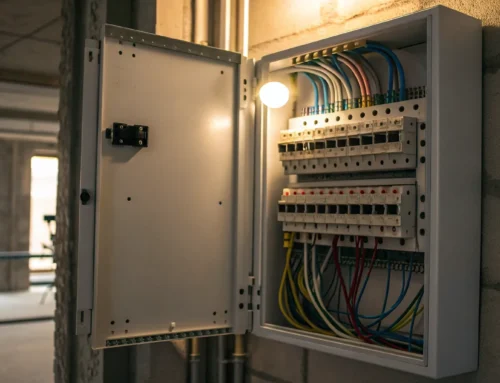
The world of backup generators can seem complex, with endless options and technical specifications. It’s easy to feel overwhelmed, and the biggest fear is making the wrong choice. What if you spend thousands on a unit that can’t even power your air conditioner when a heatwave knocks out the grid? This is where a generator load calculation removes all the guesswork and anxiety. It’s a straightforward, step-by-step analysis that gives you a precise number: the exact amount of power you need. This single piece of information empowers you to select the right Generac generator with confidence, knowing your investment is sound and your family will be protected.
Key Takeaways
- A Load Calculation is Your Power Blueprint: Before choosing a generator, you must calculate your home’s specific power needs. This critical first step prevents the common pitfalls of an undersized unit that fails under pressure or an oversized one that wastes fuel.
- Account for the Startup Surge: An accurate calculation includes two key parts: the total running watts for all your devices, plus the single highest starting watts from a motor-driven appliance like an AC unit or well pump. Forgetting this initial power jolt is a frequent and costly mistake.
- Plan for Today and Tomorrow: After calculating your total wattage, add a 25% safety margin to cover any future additions and ensure your generator isn’t overworked. For complete accuracy, a professional consultation is the best way to guarantee your investment is a perfect fit for years to come.
What is a Generator Load Calculation (And Why It’s So Important)?
Think of a generator load calculation as creating a power budget for your home or business. Before you can choose the right backup power solution, you need a clear picture of exactly what you need to run during an outage. This calculation is the critical first step in that process. It’s a detailed assessment of all the appliances, lights, and systems you want to power, from your refrigerator and HVAC unit to your computers and well pump.
This isn’t just about adding up a few numbers. A proper load calculation accounts for how much power each device needs to start up and how much it needs to run continuously. Getting this right is the foundation of a reliable backup power system. It ensures the Generac generator you choose is perfectly matched to your needs—not too small to handle the load and not too large to be inefficient. Skipping this step or relying on a rough guess can lead to frustrating performance issues and unexpected costs down the road. It’s the single most important thing you can do to guarantee your generator will be there for you when you need it most.
The Basics of Generator Sizing
At its core, generator sizing is about matching your power needs with the right equipment. The process starts with making a comprehensive list of every item you consider essential during a power outage. For each item, we identify its power consumption in watts. A key part of this is understanding that some appliances, especially those with motors like air conditioners or refrigerators, require a much larger surge of power to start than they do to run. We account for both of these figures to ensure the generator can handle those initial power demands without faltering. Finally, we add a safety margin of about 20-25% to provide a buffer, ensuring your generator can handle unexpected loads and isn’t constantly running at its absolute limit.
What Happens When You Get It Wrong?
Choosing the wrong size generator can cause significant problems. If your generator is too small for your needs, it will constantly be overloaded. This can cause it to shut down frequently, or worse, lead to permanent damage to both the generator and the appliances connected to it. It’s like asking a small car to pull a heavy trailer—it’s simply not built for that kind of strain. On the other hand, a generator that’s too large is also a problem. It will run inefficiently, wasting fuel and leading to higher operating costs over its lifetime. An oversized unit can also experience its own set of maintenance issues from not running at its optimal load. That’s why a professional residential standby generator installation always begins with a precise calculation to find that perfect fit.
How to Find Your Equipment’s Wattage Needs
Before you can choose the right generator, you need to figure out exactly how much power you’ll need. This starts with a simple but important task: calculating the total wattage of the appliances and equipment you plan to power during an outage. It’s not just about adding up numbers; you also have to understand that different devices have different power demands, especially when they first turn on. Let’s walk through how to find this information and what it all means for your home or business.
Where to Find Wattage on Your Appliances
The first step is to make a list of every item you want your generator to run. For each item, you’ll need to find its wattage. Most appliances have a data plate or sticker on the back or bottom that lists electrical specifications. Look for the number followed by a “W” for watts. If you can’t find the wattage directly, look for the amps (A) and volts (V). You can calculate the wattage yourself with a simple formula: Volts x Amps = Watts. For example, an appliance that uses 120V and 5A needs 600 watts. This appliance energy calculator from the Department of Energy can also help you estimate usage for common household items.
Running Watts vs. Starting Watts: What’s the Difference?
You’ll notice that some appliances, and all Generac generators, list two types of wattage: running and starting.
- Running watts (or rated watts) is the continuous power an appliance needs to operate normally after it has started.
- Starting watts (or surge watts) is the extra burst of power an appliance needs for a few seconds just to turn on.
Think of it like pushing a car; it takes a big initial shove to get it moving (starting watts), but much less effort to keep it rolling (running watts). Both numbers are critical for sizing your generator correctly, as the generator must be able to handle both the initial surge and the continuous load.
Why Motors Need More Power to Start
Appliances with electric motors are the main reason we have to pay attention to starting watts. Things like your refrigerator, air conditioner, well pump, or sump pump require a significant jolt of electricity to get their motors spinning. This initial power draw can be two to five times higher than their normal running wattage. If your generator can’t supply this surge, the appliance won’t start, and you could overload the generator. This is why accurately accounting for the highest starting wattage among your essential items is a key step in planning your residential standby generator installation.
Calculate Your Generator Load: A Step-by-Step Guide
Alright, you’ve done your homework and have a good handle on what running and starting watts are. Now comes the fun part: putting it all together to figure out exactly what size generator you need. This calculation is the most important step in ensuring your lights stay on and your essential systems keep running smoothly during an outage. Getting this right means you’ll have reliable power without overspending on a unit that’s too large or, worse, getting a generator that can’t handle the load. Let’s walk through the process step-by-step.
Step 1: List Everything You Need to Power
First things first, grab a notepad or open a new document and walk through your home or business. Make a complete list of every single appliance, light, and device you want to power during an outage. Think beyond the obvious like the refrigerator and freezer. Do you need your sump pump to prevent flooding? What about your well pump for water? Consider medical equipment, your home office computer and router, security systems, and even a few lights and outlets for charging phones. The more detailed your list, the more accurate your final calculation will be, setting you up for a successful residential standby generator installation.
Step 2: Add Up the Running Watts
Once you have your comprehensive list, find the running (or continuous) wattage for each item. You should find this on the appliance’s label or in its owner’s manual. Now, simply add all of those numbers together. This sum gives you the total amount of power your generator will need to produce continuously to keep everything on your list running at the same time. This figure is your baseline power requirement—the minimum steady power your generator must supply. Think of it as the total energy your home consumes on a normal basis when all those items are active.
Step 3: Factor in the Highest Starting Watts
This is a step that’s easy to miss but absolutely critical for appliances with motors. Things like your air conditioner, refrigerator, or well pump require a significant surge of extra power just to get started. Look at your list and identify the item with the single highest starting wattage. You only need to find the one with the biggest number, as it’s highly unlikely all your major appliances will start up at the exact same second. Take that single highest starting wattage and add it to your total running wattage from Step 2. This ensures your Generac generator can handle that initial jolt of power without tripping a breaker.
Step 4: Build in a Safety Margin
Finally, it’s always a good idea to give yourself a little wiggle room. Once you have your total from Step 3, multiply it by 1.25 (or add 25%) to create a safety margin. This buffer does a few important things. It accounts for any future appliances you might add, ensures your generator isn’t constantly running at its absolute maximum capacity (which is better for its longevity), and covers any small inaccuracies in the listed wattage of your current devices. This foresight helps protect your investment and ensures your system requires only routine generator maintenance to stay in top shape for years to come.
Common Mistakes to Avoid When Sizing Your Generator
Getting your generator size right is a bit like packing for a trip—you want to be prepared for everything without carrying more than you need. A precise load calculation is the key to finding that perfect balance. Unfortunately, a few common missteps can lead to choosing a generator that’s either too small to handle the load or unnecessarily large and costly. Let’s walk through the most frequent mistakes so you can sidestep them and feel confident in your choice. Making an informed decision now saves you from headaches, frustration, and unexpected costs when the power goes out.
Forgetting About Startup Power
One of the easiest mistakes to make is looking only at the running wattage of your appliances. Many devices, especially those with motors like your refrigerator, air conditioner, or well pump, need a significant surge of extra power just to get started. This is called starting wattage or surge wattage. If your generator can’t provide this initial jolt, the appliance won’t turn on, or worse, it could trip the generator’s circuit breaker. When we perform a residential standby generator installation, we always account for these power-hungry startups to ensure everything runs smoothly from the moment the generator kicks on.
Overlooking Key Technical Factors
It’s tempting to just add up the wattage of everything you own and call it a day, but a proper load calculation is more nuanced. You probably won’t be running your microwave, all the lights, the TV, and the sump pump at the exact same time. Professionals use what’s called a diversity factor to create a realistic estimate of your actual power usage at any given moment. Sizing a generator for 100% of your connected load is often overkill. A professional assessment finds the sweet spot, ensuring your Generac generator has enough power for your needs without being overworked or oversized.
Not Planning for the Future
Your power needs today might not be your power needs five years from now. Are you planning to finish your basement and add a home theater? Thinking about installing a central air conditioning system or an electric vehicle charger? These additions can significantly increase your electricity demand. When you invest in a generator, it’s wise to think ahead. Choosing a model that only meets your bare-minimum current needs could mean you’ll have to upgrade sooner than you’d like. Factoring in future growth ensures your generator will serve you well for years to come.
Skipping the Paperwork
Guessing your wattage needs is a recipe for trouble. A proper load analysis isn’t a back-of-the-napkin calculation; it’s a detailed process that involves carefully listing each appliance and circuit you want to power. This structured approach ensures nothing gets missed, from the smallest light fixture to the largest HVAC unit. For businesses, this is even more critical, as a commercial generator installation must support essential operations without fail. Taking the time to do the math correctly—or having a professional do it for you—is the single most important step in choosing the right generator.
Tools and Tips for an Accurate Calculation
Getting your generator load calculation right is part science, part art. While the steps we’ve covered will give you a solid estimate, a few professional tools and insights can help you fine-tune the numbers for complete accuracy. Think of your initial calculation as a detailed sketch; these tips are how you add the color and shading to get the full picture.
Accuracy is key because it ensures your generator will perform flawlessly when you need it most. It prevents the stress of an undersized unit failing during an outage or the unnecessary cost of an oversized one. Using the right tools and understanding a few technical details will give you confidence in your final decision.
Helpful Tools and Software
While a pen and paper are great for a preliminary list, professionals use specialized software to ensure nothing gets missed. These tools can model different scenarios and account for complex factors more accurately than a simple spreadsheet. Some manufacturers even offer their own sizing calculators to help match load requirements to specific models. Ultimately, the most valuable tool is an experienced technician who knows how to interpret that data and apply it to your specific home or business needs for a Generac generator. They bring practical knowledge that software alone can’t provide.
Why Good Documentation Matters
When it comes to sizing a generator, real-world data always beats theory. The most accurate way to understand your power needs is to look at your actual usage. For homeowners, this can be as simple as reviewing your monthly utility bills to find your peak consumption. For businesses, this might involve a more formal energy audit. This documentation provides a clear, evidence-based picture of your consumption patterns. Having this data on hand helps a professional recommend a generator that’s truly tailored to your operational needs, especially for a commercial generator installation.
kW vs. kVA: What You Need to Know
As you research generators, you’ll likely see two power ratings: kilowatts (kW) and kilovolt-amperes (kVA). In simple terms, kW is the “actual power” an appliance uses, while kVA is the “apparent power,” or total power consumed. The difference is called the power factor. For example, a facility with a 400 kW load and a 0.80 power factor actually needs a 500 kVA generator. While the difference is small for most homes, it’s a critical detail that a professional will handle during a residential standby generator installation to ensure your unit is sized correctly.
The Importance of Regular Load Testing
A load calculation tells you what your generator should do, but a load test proves that it can. A load test is essentially a stress test for your generator, confirming it can produce the required power without overheating or failing. This isn’t just a one-time check; it’s a critical part of a good maintenance plan. It verifies that the engine, alternator, and cooling system are all working together as they should under pressure. Think of it as a fire drill for your power system—it’s the best way to ensure everything works when it counts and a key part of any Generac maintenance plan.
Choosing the Right Generac Generator for Your Needs
Once you have your total wattage calculated, you’re ready for the exciting part: matching your power needs to the perfect generator. Think of your load calculation as a blueprint. It gives you the exact specifications you need to find a reliable power solution that won’t let you down when you need it most. This final step is all about translating your numbers into the right piece of equipment for your home or business, ensuring you get a generator that’s just right—not too big and not too small.
Match Your Load to a Generac Model
Your load calculation is your guide to the wide world of Generac generators. To find the right fit, you’ll start by calculating the total wattage needs of the appliances and systems you plan to power. Remember that most generators have both running watts and starting watts, which are crucial for determining the appropriate model. With your final number in hand, you can confidently browse models knowing exactly what capacity you’re looking for. Whether you need to power just the essentials, like your refrigerator and sump pump, or want the peace of mind that comes with a whole-home unit, your calculation will point you in the right direction.
Why a Professional Consultation is Key
While a DIY calculation is an excellent starting point, it’s best not to rely on theory alone when making such an important investment. For truly accurate sizing, a professional can perform a demand study of your actual load over time to capture peak usage. An expert consultation for your residential standby generator installation ensures nothing gets missed. We can identify “phantom loads,” account for the specific power demands of modern electronics, and discuss your future needs, like a planned home addition or a new hot tub. This professional check guarantees your generator will be a perfect fit for years to come.
When to Call for Expert Help
For businesses and facilities with complex power needs, an expert consultation is non-negotiable. Most commercial buildings with substantial motor loads, like HVAC systems or manufacturing equipment, can benefit from a professional assessment. An expert can evaluate factors like power factor correction to optimize your generator size, which can impact both upfront and long-term costs. A hospital, for example, might install a 1500 kW generator for critical loads rather than a 3000 kW unit for the entire facility. For any commercial generator installation, getting an expert involved from the start ensures your operations stay online safely and efficiently during an outage.
Related Articles
- Commercial Standby Generator Installation Essentials
- Commercial Generac Generator: The Ultimate Guide
- Generac Generator Prices: A 2025 Buyer’s Guide
Frequently Asked Questions
Can’t I just buy a bigger generator to be safe and skip the detailed calculation? While it might seem like a safe bet, getting a generator that’s too large for your needs can cause its own set of problems. An oversized unit runs inefficiently, which wastes fuel and can lead to premature wear and maintenance issues over time. The goal is to find the perfect fit, ensuring the generator runs at its optimal load to give you reliable, efficient power for years.
What’s the single biggest mistake people make with their load calculation? The most common oversight is forgetting about starting watts. People often add up the regular running wattage of their appliances and call it a day, but they forget that items with motors—like your air conditioner or well pump—need a huge burst of power to get started. If your generator can’t handle that initial surge, it will trip or fail, leaving you in the dark right when you need it most.
Does this calculation work for both my home and my business? Yes, the fundamental process of listing your essential equipment and adding up the wattage is the same for both. However, commercial calculations are often more complex. They need to account for things like three-phase power, specialized machinery, and the critical nature of business operations. While a homeowner can get a great estimate on their own, a business should always start with a professional assessment.
What happens if my power needs change after my generator is installed? This is a great question and exactly why we recommend planning for the future. If you add a major appliance like an EV charger or finish your basement, your power needs will increase. A generator that was perfectly sized before might now be too small. This is why building in a safety margin during the initial calculation is so important, as it provides a buffer for minor additions. For significant changes, it’s best to consult a professional to see if your current system can handle the new load.
I’ve done the math, but I’m still not sure. What’s the next step? Doing the calculation yourself is an excellent way to understand your power needs and budget. But for an investment this important, getting a second opinion from a professional is always a smart move. An expert can verify your numbers, spot things you might have missed, and discuss your specific goals to ensure the Generac model you choose is a perfect match for your property.