A generator isn’t a one-size-fits-all solution. The power needs of a restaurant with walk-in freezers and commercial ovens are completely different from those of a retail boutique running lights and a single cash register. The first step in protecting your business is understanding what makes it unique. Answering the question of what size generator for a small business begins with a detailed look at your specific operations. This guide is designed to help you do just that. We’ll explore how to assess your essential equipment and calculate a power load that ensures seamless operation, no matter what your industry.
Key Takeaways
- Determine your true power load by listing every essential device: To get an accurate number, find both the running watts for continuous operation and the single highest starting watts to handle the initial power surge from your equipment.
- Choose a generator that fits your business now and in the future: Consider your industry’s specific needs, like refrigeration for a restaurant, and select a unit with 20-25% more capacity than you currently require to allow for future growth.
- Rely on a professional for sizing and installation: An expert provides an accurate load calculation, ensures the entire system is safe and compliant with local codes, and helps you make a reliable long-term investment in your business’s continuity.
What Goes Into Sizing a Generator?
Choosing the right generator for your business involves more than just picking a model that looks powerful enough. Sizing is a careful process that considers several key factors to ensure you have reliable power when you need it most. Getting this step right is critical. A generator that’s too small won’t be able to handle your essential equipment, leaving you vulnerable during an outage. On the other hand, a unit that’s too large can be inefficient and more costly to operate. It’s about finding that perfect balance of power and efficiency for your unique operations. Think of it like finding the right tool for the job; the best one depends on your specific needs. To get started, you’ll want to think about the type of generator you need, the fuel it will run on, the kind of power your equipment uses, and where the unit will be installed. Let’s walk through each of these points so you can feel confident in your decision.
Standby vs. Portable
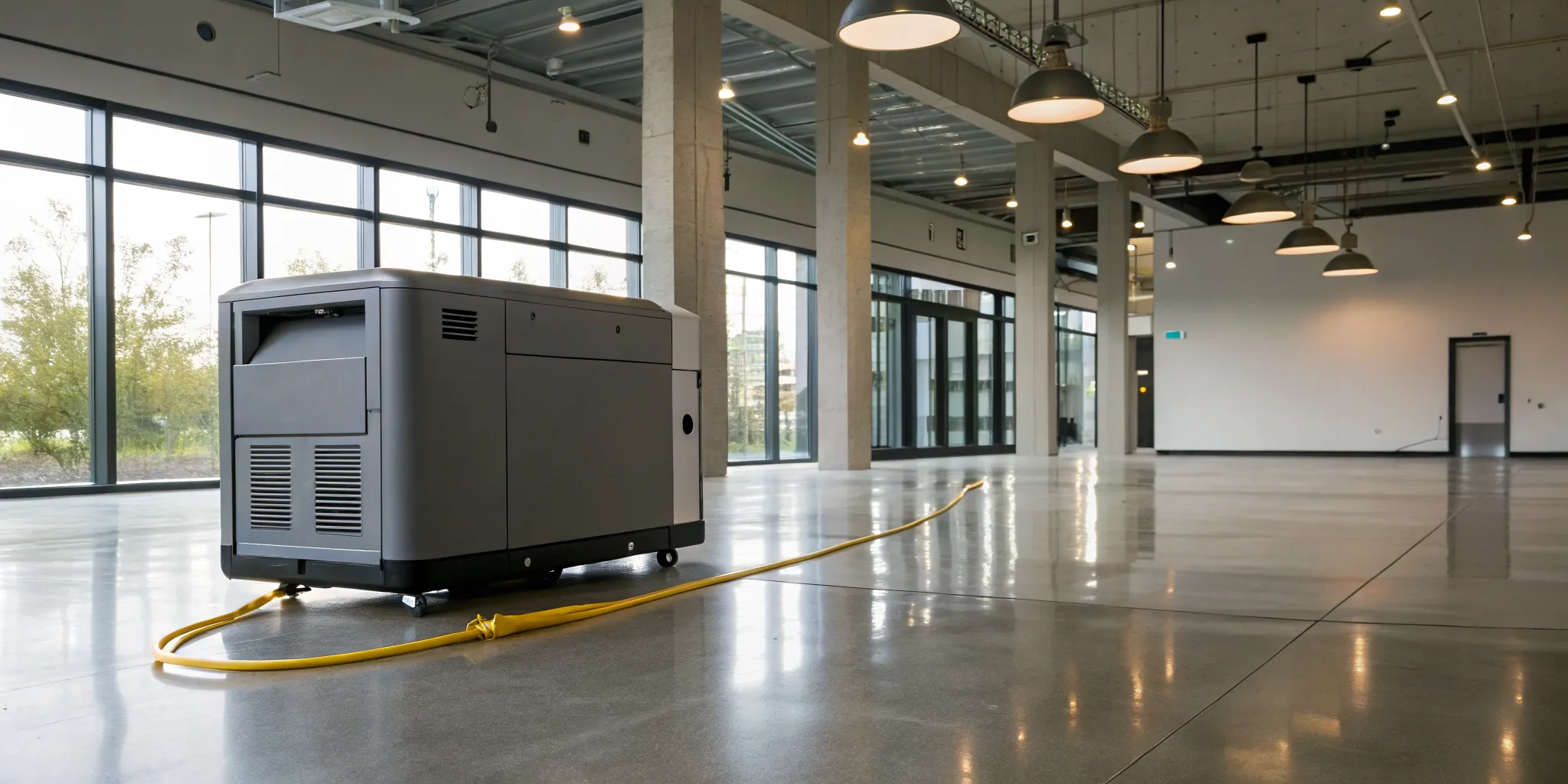
The first choice you’ll make is between a standby and a portable generator. A standby generator is a permanent solution that’s installed outside your business, much like an air conditioning unit. It’s connected directly to your electrical system and automatically kicks in the moment an outage occurs, powering your entire building without any manual effort. Most businesses that need uninterrupted power choose a commercial generator installation for this reason. Portable generators, on the other hand, are smaller, can be moved around, and are better suited for temporary needs like powering tools at a construction site or for a special event. For consistent, reliable backup power, a standby generator is the way to go.
Fuel Type
Your generator needs fuel to run, and you have a few options to consider. Natural gas is a popular choice because it provides a continuous supply from your utility line, burns cleanly, and is often cost-effective. However, it does depend on the utility infrastructure remaining intact during an emergency. Propane is another clean-burning option that can be stored on-site in a tank, giving you a self-contained fuel source. Diesel is known for being highly efficient and powerful, making it a workhorse for larger operations, though it can be noisier. The right fuel for your Generac generator will depend on what’s available at your location and your specific operational needs.
Single-Phase vs. Three-Phase Power
Next, you’ll need to match the generator to your building’s electrical service. Most small businesses, retail shops, and offices run on single-phase power, which is perfect for everyday needs like lights, computers, and standard equipment. It’s the same type of power you have in your home. However, businesses that use heavy-duty equipment, large motors, or commercial kitchen appliances often require three-phase power. This type of service delivers a more stable and robust stream of electricity for demanding machinery. Knowing which power phase your business uses is essential for selecting a generator that can safely and effectively handle your electrical load.
Location and Noise Levels
Finally, think about where the generator will live. You’ll need a spot that complies with local safety codes, ensuring proper ventilation and clearance from any flammable materials. It also needs to be accessible for routine generator maintenance and refueling if necessary. Noise is another important consideration, especially if your business is located near a residential area or has outdoor seating for customers. Modern standby generators are designed to run quietly, but placement can further minimize any disruption. A professional installer will help you find the perfect location that balances safety, convenience, and noise control.
How to Calculate Your Business’s Power Needs
Sizing a generator isn’t a guessing game. In fact, it’s one of the most critical decisions you’ll make when preparing your business for a power outage. Choosing a unit that’s too small will leave you without power for critical systems, forcing you to make tough choices about what stays on and what goes off. On the other hand, a generator that’s too large means you’ve overspent on capacity you’ll never use, tying up capital that could be used elsewhere in your business. The right approach is to calculate your specific power needs to find the perfect fit.
Don’t let the idea of calculations intimidate you. It’s a straightforward process that empowers you to make an informed decision. By following a few simple steps, you can get a clear picture of the wattage required to keep your business running smoothly, protecting your inventory, serving your customers, and keeping your team safe. This simple calculation is the foundation for making a smart, cost-effective investment in a commercial generator. We’ll walk you through how to list your essential equipment, find the right wattage numbers, add them up correctly, and even plan for your business’s future growth.
Step 1: List Your Essential Equipment
First, walk through your business and make a complete list of every piece of equipment you can’t live without during a power outage. Think beyond the obvious. Of course, you’ll need lights and computers, but what about your security system, cash registers, or internet modem? For a restaurant, this list would include refrigerators, freezers, and cooking equipment. For an office, it might be servers, phones, and the HVAC system. Be thorough and create a comprehensive inventory of everything that is absolutely essential for safety, security, and basic operations. Don’t forget to consider both indoor and outdoor needs.
Step 2: Find the Starting and Running Watts
Every appliance has two power ratings: running watts and starting watts. Running watts are the continuous power an item uses, while starting watts are the extra surge of power needed to turn it on, which is especially high for equipment with motors like refrigerators or air conditioners. You can usually find these numbers on the manufacturer’s label or in the owner’s manual. If the label only lists amps and volts, you can calculate the watts by multiplying the two (Amps x Volts = Watts). Document both the running and starting watts for every item on your essential equipment list.
Step 3: Calculate Your Total Wattage
Now it’s time for some simple math. First, add up the running watts for all the essential items on your list. This gives you the total running wattage your generator needs to produce continuously. Next, identify the single highest starting wattage from your list. You only need to account for the highest one because it’s unlikely all your motorized equipment will start at the exact same moment. Add this single highest starting wattage to your total running wattage. The final number is the minimum power your generator must be able to produce to keep your business operational.
Step 4: Plan for Future Growth
Your calculated wattage is your minimum requirement, but it’s wise to plan for the future. A good rule of thumb is to choose a generator with about 20% to 25% more capacity than your calculated total. This buffer does two things. First, it prevents your generator from running at maximum capacity, which can shorten its lifespan. Second, it gives you the flexibility to add more equipment as your business grows without needing to buy a whole new generator. Investing in a slightly larger Generac generator now is a smart move that provides peace of mind and supports your future success.
What Size Generator Does My Business Need?
Choosing the right size generator isn’t a one-size-fits-all process. The power needs of a small boutique are vastly different from those of a bustling restaurant or a critical care facility. The key is to think about what absolutely must stay on during an outage for your business to function safely and effectively. For some, it’s the lights and payment systems. For others, it’s life-saving medical equipment.
Understanding your industry’s specific demands is the first step toward finding the perfect fit. A generator that’s too small won’t be able to handle your essential load, leaving you vulnerable during an outage. One that’s too large can lead to inefficient operation. A proper commercial generator installation starts with an accurate assessment of your power requirements, ensuring you have reliable backup power precisely when you need it most. Let’s look at a few common business types to see how their needs differ.
For Retail and Small Offices
If you run a retail shop or a small office, your main goal during a power outage is to maintain a safe environment and continue serving customers. Start by making a list of your essential equipment. This typically includes your lighting, computers, point-of-sale (POS) systems, security alarms, and heating or cooling systems. Once you have your list, you can calculate the total wattage needed to keep these items running. A good rule of thumb for retail spaces is to plan for around 50 kW plus an additional 10 watts per square foot, but a professional load calculation will give you the most accurate number for your specific setup.
For Restaurants and Food Service
For any business in the food service industry, a power outage can be catastrophic. Spoilage can lead to thousands of dollars in lost inventory, not to mention lost revenue from being unable to operate. Your generator needs to power everything from walk-in coolers and freezers to ovens, grills, and your POS system. When you calculate your total wattage, it’s a smart move to add an extra 25% to your final number. This buffer gives you a safety net for unexpected power draws and accounts for any new equipment you might add as your business grows.
For Healthcare Facilities
In a healthcare setting, a generator isn’t just for convenience, it’s a critical piece of life-saving infrastructure. Standby power is non-negotiable. These generators are designed to switch on automatically the moment an outage is detected, ensuring that patient monitoring systems, respiratory equipment, and other vital devices never lose power. Sizing a generator for a medical office or care facility is far more complex than for other businesses due to strict regulations and the critical nature of the equipment. It’s essential to work with a professional to ensure your system is sized correctly and meets all compliance standards for generator service and repair.
Avoid These Common Sizing Mistakes
Choosing the right generator size is more of a science than a guessing game. Getting it wrong can lead to frustrating and costly problems, from an overloaded unit that fails when you need it most to an oversized one that wastes fuel and wears out prematurely. A properly sized generator is a reliable partner for your business, ready to kick in seamlessly during an outage. Let’s walk through a few common missteps so you can feel confident in your decision.
Underestimating Your Power Load
One of the most frequent errors business owners make is simply guessing their power needs. It’s easy to overlook a piece of equipment or misjudge how much power everything draws, but even small miscalculations can lead to big problems. An undersized generator will struggle to keep up, risking overload and shutdown right when you need it. To avoid this, you need a precise calculation of your total power load. This ensures your Generac generator can handle the demands of your daily operations without a hitch, protecting your equipment and your bottom line.
Forgetting About Power Surges
It’s not just about the total wattage; it’s also about how your equipment uses that power. Many appliances and machines require a large surge of electricity just to start up, which can be much higher than their regular running wattage. If your generator isn’t sized to handle these initial surges, it can trip the circuit breaker. On the other hand, a generator that’s too large is inefficient. It will burn more fuel than necessary and can experience a shorter lifespan from running at low loads. Finding that sweet spot is key for both performance and longevity.
Not Planning for Growth
The generator that fits your business perfectly today might not be the right fit a few years from now. Are you planning to expand your office, add new kitchen equipment, or bring in more machinery? A generator is a long-term investment, so it’s important to think about your future needs. A unit that’s too small will quickly become obsolete as your business grows, forcing another big purchase. Planning for potential growth during the initial commercial generator installation ensures your investment continues to serve you well into the future.
Does Power Phase Matter for Your Business?
When you start looking at generators, you’ll see the terms “single-phase” and “three-phase.” It might sound technical, but it’s really about how power is delivered to your equipment. Think of it like the difference between a one-lane road and a three-lane highway. Both get you where you’re going, but one can handle much heavier traffic. Choosing the right one is key to ensuring your generator runs everything smoothly and efficiently. The type of power your business uses will directly influence which Generac generators are the right fit for your needs.
Choosing Single-Phase Power
For most small businesses, single-phase power is all you’ll need. If your daily operations rely on standard equipment like computers, lights, point-of-sale systems, and office appliances, a single-phase generator will handle the load perfectly. This type of power delivery is the standard for residential homes and smaller commercial spaces for a reason. It’s generally a more cost-effective and straightforward setup, making it the ideal choice for businesses with lower, less complex power demands. It provides consistent, reliable power to keep your essential systems running during an outage without overcomplicating your electrical system.
When to Use Three-Phase Power
If your business operates heavy-duty equipment or specialized machinery, three-phase power is non-negotiable. This robust system is designed for larger operations like manufacturing plants, restaurants with commercial kitchens, farms, or data centers. It delivers a more stable and consistent flow of power, which is essential for running high-capacity motors and equipment efficiently. While the initial investment for a three-phase system is higher, the reliability and performance are critical for businesses with significant power needs. Proper commercial generator installation ensures your high-demand equipment is always ready to go, protecting your operations from costly downtime.
Why Work With a Pro for Sizing and Installation?
When it comes to powering your business, guessing isn’t an option. While a DIY approach might seem tempting for some projects, commercial generator installation is a complex process where precision is key. An incorrectly sized or installed generator can lead to equipment damage, premature failure, or a complete inability to power your essential operations when you need it most. It’s a significant investment, and you want to make sure it’s done right from the very beginning. This isn’t just about convenience; it’s about protecting your inventory, serving your customers, and maintaining your revenue stream during an outage.
Working with a professional ensures your generator is perfectly matched to your needs and installed to meet the highest safety standards. It’s about more than just getting the power on; it’s about securing a reliable, efficient, and safe backup power solution that protects your business for years to come. From calculating your specific energy requirements to handling the final connections and permits, an expert manages every detail. This allows you to focus on running your business with complete peace of mind, knowing that your power is in good hands. A professional partnership gives you confidence that your system will work flawlessly when the grid goes down.
Get an Accurate Load Calculation
Sizing a generator for your business involves more than just adding up the wattage of your lights and computers. A professional load calculation considers the specific power demands of your equipment, including the critical difference between running watts and starting watts. Many commercial appliances, like refrigeration units or HVAC systems, require a significant surge of power to start up. A simple calculation can easily miss this, leaving you with a generator that can’t handle the initial demand. An expert ensures these complex calculations are done correctly, so you get a generator that meets your needs without being oversized and inefficient.
Ensure Safety and Code Compliance
A professional generator installation is essential for safety and performance. Experts are well-versed in local and national electrical codes, ensuring every aspect of the installation is compliant. This includes proper placement for ventilation, secure fuel line connections, and the correct wiring to your building’s electrical system. A proper commercial generator installation not only protects your equipment and your property but also keeps your employees and customers safe. It also helps you avoid potential fines or issues during inspections, ensuring your backup power system is a reliable asset, not a liability.
Partner with a Certified Generac Expert
When you work with a certified professional, you’re getting more than just an installer; you’re getting a partner. An expert can help you select the right size generator, find the best location for it on your property, and make sure it fits your budget. Certified technicians have in-depth knowledge of the equipment and can optimize it to run efficiently over its entire lifespan. By partnering with an experienced team of professionals, you can be confident that your generator will perform reliably when you need it most, protecting your business from costly downtime.
Related Articles
- The Ultimate Commercial Generator Sizing Guide
- Backup Power for Business Lansdale: What to Know
- Generator Load Calculation Guide: Sizing Tips & Mistakes | M.T. Ruhl Electrical
Frequently Asked Questions
What’s the difference between starting watts and running watts? Think of running watts as the steady power an appliance needs to operate continuously. Starting watts, on the other hand, are the extra jolt of power required for a brief moment to get equipment with a motor, like a refrigerator or an air conditioner, up and running. This initial surge can be two to three times higher than the running wattage, so it’s a critical number to account for when sizing your generator.
Is it better to just get a bigger generator to be safe? While it’s smart to plan for a little extra capacity, simply buying the biggest generator you can find isn’t the best strategy. A generator that is too large for your actual needs will run inefficiently, burn more fuel than necessary, and can even experience a shorter lifespan. The goal is to find the right balance, a unit that can handle your specific load with about 20-25% extra room for future growth.
How do I know if my business needs single-phase or three-phase power? A simple way to tell is by looking at your equipment. If your business primarily uses standard lighting, computers, and basic office appliances, you most likely have single-phase power, which is common in smaller commercial spaces. If you operate heavy machinery, large motors, or commercial-grade kitchen equipment, you probably require the more robust power delivery of a three-phase system. A licensed electrician can confirm this by inspecting your electrical panel.
Can I add more equipment to my generator’s load later on? Yes, you can, as long as you plan for it from the start. This is precisely why we recommend choosing a generator with slightly more capacity than your current calculated needs. That extra 20-25% buffer gives you the flexibility to add a new piece of equipment or expand your operations down the road without having to worry about overloading your system or investing in a brand new generator.
What does a professional load calculation actually involve? A professional load calculation is a detailed assessment of your business’s unique power requirements. An expert will walk through your facility to create a complete inventory of all the essential circuits and equipment you need to power during an outage. They will then determine the specific starting and running wattage for each item and calculate a precise total, ensuring the generator we recommend is a perfect match for your operational needs.