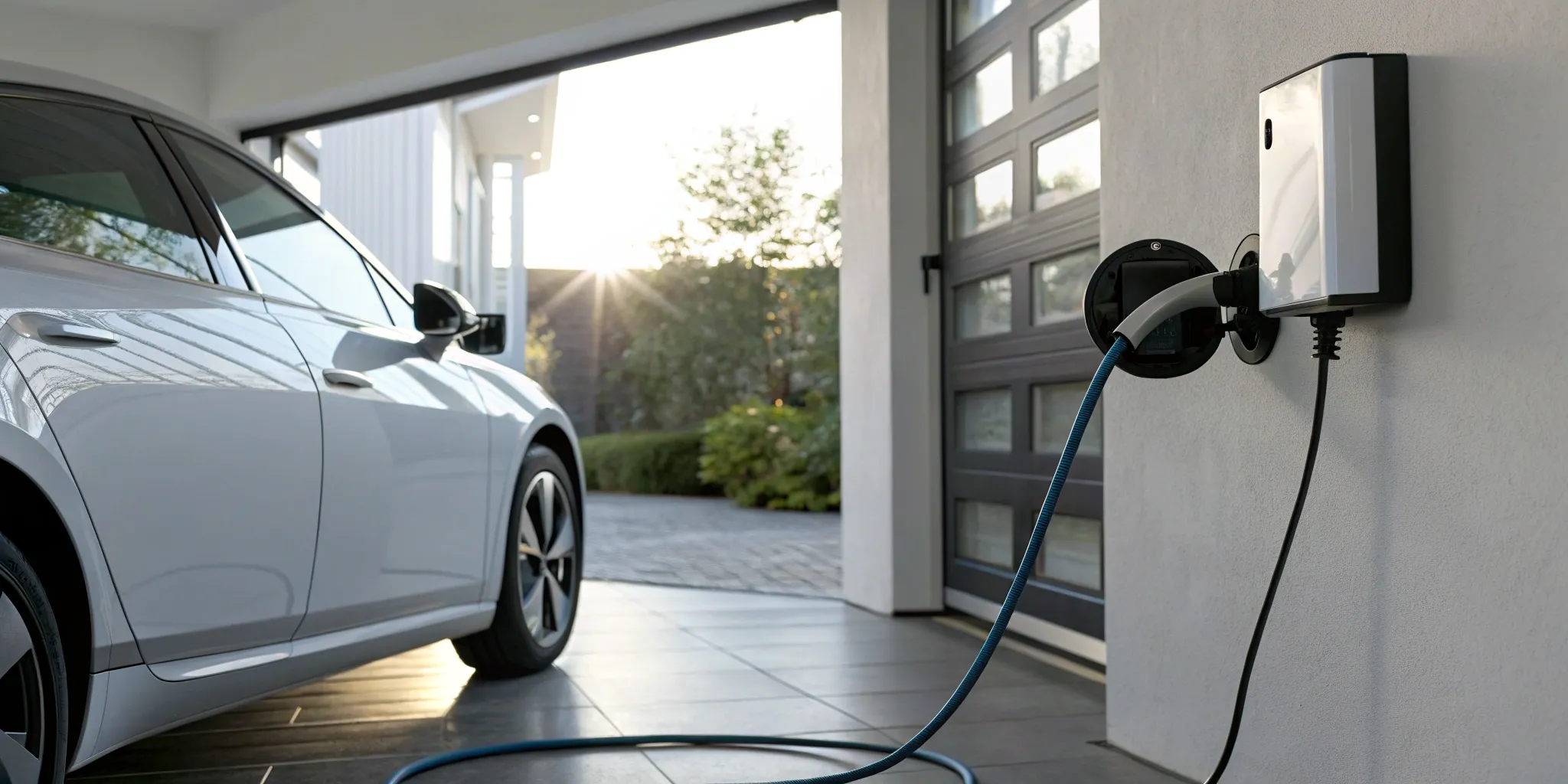
Waking up to a nearly empty EV battery because the breaker tripped overnight is beyond frustrating. This common headache, known as “nuisance tripping,” often happens when your charger is on a GFCI-protected circuit. It can make you question your wiring or even your new charger. But the problem is usually a simple conflict between built-in safety features. This begs the question: what is the importance of a GFCI breaker if it seems to create more problems than it solves? We’ll explain why this happens and, more importantly, how to get your charging setup right.
Key Takeaways
- Location and Connection Type are Key: A GFCI breaker is a must-have for any outdoor charger or indoor plug-in model to protect against shock. For hardwired indoor units, however, a separate GFCI breaker is often not required and can even cause unnecessary tripping.
- Avoid “Double Protection” Issues: Most EV chargers have built-in GFCI protection. Adding a second GFCI breaker in your panel can create a conflict between the two safety systems, leading to frustrating “nuisance trips” even when there’s no real danger.
- Trust a Licensed Electrician, Not a Guess: Navigating national codes, local rules, and manufacturer specs is a job for a professional. A qualified electrician will ensure your setup is safe, compliant, and correctly configured to prevent problems from the start.
What’s a GFCI Breaker and How Does It Protect You?
Think of a GFCI breaker as a super-fast, highly sensitive safety switch for your electrical circuits. GFCI stands for Ground Fault Circuit Interrupter, and its one job is to protect you from dangerous electrical shocks. It’s a crucial piece of safety equipment, especially for high-power appliances like an EV charger that might be located in your garage or outdoors where moisture can be a factor.
Unlike a standard circuit breaker that trips when there’s a major overload (like running too many appliances at once), a GFCI breaker is looking for something much smaller and more specific: a tiny leak in the electrical current that could signal a person is at risk of being shocked. It acts in a fraction of a second to cut the power, preventing a potentially serious injury. Understanding how it works is the first step in figuring out if you need one for your EV charger setup.
How Ground Fault Protection Prevents Electrical Shocks
So, what exactly is a “ground fault”? It happens when electricity strays from its intended path and tries to find a shortcut to the ground. Unfortunately, if you’re touching a faulty appliance or a wet surface, that shortcut can be through your body. A GFCI breaker is designed to prevent this exact scenario. It constantly monitors the electrical flow, and the moment it senses that current is going somewhere it shouldn’t, it shuts everything down. This is why GFCI protection is so vital in damp locations. When you’re plugging in your EV charger in a garage or carport, you need that extra layer of safety. Any issues with your home’s circuits should be handled by a professional who can perform the necessary electrician repairs to keep your system safe.
How GFCIs Detect Dangerous Electrical Imbalances
The magic of a GFCI breaker lies in its ability to detect incredibly small changes in electricity. It works by measuring the amount of current flowing from the breaker to your EV charger and comparing it to the amount of current flowing back. In a perfectly safe circuit, these two amounts should be exactly the same. However, if there’s a ground fault, some of that current will “leak” out. A standard GFCI breaker is designed to trip and shut off the power if it detects a leak as small as 4-6 milliamps (mA). This response is almost instant, stopping the flow of electricity before it can cause harm. This level of sensitivity is a key part of modern residential electric safety standards.
Is a GFCI Breaker Required for Your EV Charger?
When it comes to electrical work, safety codes aren’t just suggestions—they’re requirements designed to protect you, your family, and your property. The big question for many new EV owners is how these rules apply to their charging setup. The answer depends on both national standards and local regulations, which is why it’s so important to get it right. While your charger has its own safety features, the electrical code provides an essential layer of protection for the circuit itself.
Understanding these requirements ensures your installation is not only safe but also compliant, avoiding potential issues down the road. Let’s break down what the codes say and why a local expert’s advice is so valuable.
Breaking Down the National Electrical Code (NEC) Rules
The National Electrical Code, or NEC, is the benchmark for safe electrical design and installation across the United States. For EV charging, the NEC is very specific. It requires GFCI protection for all 150-volt to 250-volt receptacles rated 50 amps or less. This includes the common NEMA 14-50 outlet that many plug-in Level 2 chargers use. The primary goal is to prevent electric shock, especially in areas where moisture could be present.
Recent updates to the code have even expanded this rule to include equipment in garages with floors at or below ground level. Because the NEC sets the minimum standard for safety, following its guidelines is the first step in any proper residential electrical project.
Don’t Forget: Why Local Codes Matter, Too
While the NEC provides a national framework, your local municipality has the final say. Think of the NEC as the main rulebook, but your town or county can add its own specific amendments. These local codes are enforced by the “Authority Having Jurisdiction” (AHJ), which is usually your local building or electrical inspector. They might have stricter requirements or interpret the national code in a specific way for your area.
This is why you can’t rely on a quick internet search alone. The safest approach is to work with a qualified electrician who is familiar with the regulations in Southeastern Pennsylvania. They’ll know exactly what’s required in Chester, Montgomery, Bucks, or Delaware County, ensuring your EV charger installation is fully compliant and, most importantly, safe.
Does Your EV Charger Already Have Built-In GFCI?
The short answer is yes, most modern Level 2 EV chargers (also called Electric Vehicle Supply Equipment or EVSE) come with their own GFCI protection built right in. This internal safety feature is designed to monitor the electrical current and shut off power immediately if it detects a ground fault, which could otherwise lead to a dangerous electric shock.
However, just because the charger has this feature doesn’t automatically mean you can skip a GFCI breaker in your electrical panel. The type of charger you have and how it’s installed play a huge role in what the electrical code requires. This is where things can get a little confusing, but understanding the safety features inside your charger is the first step to getting it right.
A Look Inside: Safety Features of Level 2 Chargers
The ground fault protection inside an EV charger is a bit different from the standard GFCI breaker you might have for your bathroom or kitchen outlets. Most EV chargers have a system that trips at a 20 milliamp (mA) threshold. A standard GFCI breaker, on the other hand, is much more sensitive and trips at just 4-6 mA. This difference is intentional. The higher threshold in the charger prevents “nuisance tripping” from the normal electrical fluctuations that happen during charging, while still providing robust protection against genuine electrical hazards. It’s a smart design that ensures both safety and reliability for your vehicle.
Portable vs. Hardwired: Is One Safer Than the Other?
How your charger connects to your home’s power makes a big difference. If you have a professional perform a hardwired installation for your Level 2 charger, many electrical codes say you don’t need an additional GFCI breaker. That’s because the charger’s built-in protection is considered sufficient for a permanent, secure connection. In contrast, portable or plug-in chargers are a different story. Since they connect via an outlet, that outlet itself often needs GFCI protection, especially if it’s located in a garage, basement, or outdoors. This is a critical distinction that a qualified electrician can help you with for any residential electric projects.
Why Does My GFCI Breaker Keep Tripping?
If you’ve ever plugged in your EV only to find the circuit breaker has tripped again, you know how frustrating it can be. This often happens when a GFCI breaker is part of your charging setup, but it doesn’t necessarily mean there’s a dangerous electrical fault. More often than not, the issue is a conflict between the safety features in your home’s electrical system and those inside the charger itself.
This frequent, unnecessary tripping can interrupt your charging schedule and leave you wondering if something is wrong with your wiring or your vehicle. Understanding why this happens is the first step to finding a solution. Let’s look at two common reasons for this issue: nuisance tripping and the problem of “double protection.” If you’re constantly dealing with a tripped breaker, it might be time to call for an electrician repair to diagnose the problem correctly.
What Is “Nuisance Tripping” and How Do You Stop It?
“Nuisance tripping” is a term electricians use when a GFCI breaker shuts off power without a genuine safety threat. It’s a common headache for EV owners because most modern chargers already have their own built-in GFCI protection. When you have a GFCI breaker protecting a circuit that also has a GFCI-protected EV charger plugged into it, the two systems can interfere with each other. The breaker becomes overly sensitive, reacting to tiny, harmless fluctuations in the electrical current and causing unnecessary interruptions while you’re trying to charge your car.
Can You Have Too Much Protection? The “Double GFCI” Issue
The issue boils down to having two layers of safety that aren’t designed to work together. Most Level 2 EV chargers include a safety feature that functions like a GFCI, but it’s often set to a different sensitivity level than the GFCI breaker in your panel. This “double protection” creates a conflict. The charger’s internal protection and the breaker are both monitoring the electrical current, and their conflicting standards can lead to the breaker tripping unexpectedly. This is why a proper residential electrical setup is so important; a qualified electrician will know how to prevent these conflicts from the start.
So, Do I Really Need a GFCI Breaker for My EV Charger?
Deciding whether you need a GFCI breaker for your EV charger isn’t always straightforward. The right answer depends on where you’re installing the charger, what type of charger you choose, and your local electrical codes. While it might seem like a minor detail, getting it right is essential for safety and for ensuring your charger works without constant interruptions. Let’s break down the specific situations where a GFCI breaker is required, and when it might be optional or even cause problems. Understanding these key differences will help you make an informed decision and plan your installation correctly from the start.
Does Location Matter? Indoor vs. Outdoor Rules
The location of your EV charger is the first major factor to consider. The rules are quite clear when it comes to outdoor installations. According to the National Electrical Code (NEC), any outdoor electrical equipment connected to a 50-amp circuit or smaller requires GFCI protection. This is a critical safety measure because outdoor chargers are exposed to rain, snow, and humidity, which increases the risk of a ground fault. A GFCI breaker will instantly cut power if it detects an imbalance, preventing a potential electrical shock. So, if you plan to install your charger on an exterior wall, in a carport, or anywhere outside your home, a GFCI breaker is a must.
How Your Setup Affects GFCI Needs: Plug-In vs. Hardwired
The type of connection you choose also plays a big role. If you opt for a plug-in Level 2 charger, the electrical code generally requires the outlet it plugs into to have GFCI protection, especially in locations like a garage, which is considered a potentially wet environment. On the other hand, if you choose to hardwire your charger, the rules often change. A hardwired unit is permanently connected to your home’s electrical system, which is a more secure and sealed connection. Because of this, many electrical codes do not require a separate GFCI breaker for a hardwired EV charger. This is a key distinction to discuss with your electrician when planning your residential electric project.
A Quick Checklist to Help You Decide
Beyond location and connection type, there are a couple of other important things to keep in mind. First, most modern Level 2 EV chargers already have GFCI protection built directly into the unit. This internal safety feature performs the same function as a GFCI breaker. If you install a GFCI breaker on a circuit for a charger that already has its own GFCI, you can run into an issue called “nuisance tripping.” This happens when the two GFCI systems interfere with each other, causing the breaker to trip even when there isn’t a real safety hazard. The most important factor is always your local electrical code, which can have specific requirements. A qualified electrician can perform the necessary electrician repairs and installations while ensuring everything is up to code.
What Are the Alternatives to a GFCI Breaker?
If you’re exploring your options for an EV charger installation, you might be wondering if a GFCI breaker is your only choice for safety. While it’s a common and highly effective solution, it’s not the only path forward. Depending on your specific setup—like whether your charger is a plug-in model or hardwired directly into your electrical system—there are a couple of other routes you can take.
The two main alternatives are using a GFCI outlet instead of a breaker or relying on the safety features already built into your EV charger. Each option comes with its own set of rules and considerations, and the right choice often comes down to the type of charger you have, where it’s being installed, and what your local electrical codes require. Getting familiar with these alternatives can help you have a more informed conversation with your electrician to find the safest and most practical solution for your home.
Could a GFCI Outlet Work Instead?
For those using a plug-in Level 2 EV charger, a GFCI outlet can be a fantastic alternative to a dedicated GFCI breaker. This type of outlet provides the same critical ground fault protection, just at the point of connection rather than back at the circuit breaker panel. Modern electrical codes often require GFCI protection for any new circuit installed in potentially damp locations like garages or outdoors, which is where most EV chargers live.
By installing a GFCI outlet, you can meet these safety requirements without needing a GFCI breaker. It’s a compliant and reliable solution that provides the necessary protection against electrical shock right where you plug in your car. A qualified electrician can handle the electrical installation to ensure your new outlet is wired correctly and safely supports your charger’s power demands.
Is Your Charger’s Built-in Protection Enough?
You may have heard that most Level 2 EV chargers come with their own ground fault protection built right in. This is true, and it’s a key safety feature. However, relying solely on this internal protection can be a bit tricky. The protection inside a charger (often called CCID20) typically trips at a different, higher electrical threshold than a standard GFCI device. This means it may not meet the strict definition of personnel protection required by the National Electrical Code (NEC).
Furthermore, some charger manufacturers actually advise against using a GFCI breaker with their hardwired units to prevent “nuisance tripping,” where the combined sensitivity of two GFCIs causes the power to shut off unnecessarily. This is why it’s so important to work with a professional who can interpret the manufacturer’s guidelines alongside local code requirements to make the right call.
Why is GFCI Protection So Important?
When it comes to installing an EV charger, cutting corners on safety is never worth the risk. Skipping a GFCI breaker might seem like a way to save a little money or avoid potential “nuisance tripping,” but it leaves you, your family, and your property vulnerable. A Ground Fault Circuit Interrupter is your first line of defense against serious electrical hazards. It’s designed to do one thing exceptionally well: detect tiny imbalances in the electrical current and shut the power off in a fraction of a second, long before a dangerous situation can escalate.
Think of it as a crucial safety net for your high-power charging setup. Without it, you’re exposing yourself to the risk of severe electric shock and creating conditions that could damage your home’s electrical system or your electric vehicle—one of your most expensive assets. The National Electrical Code (NEC) has specific requirements for a reason, and they are all centered on preventing worst-case scenarios. A proper installation by a qualified electrician ensures that your charging station is not only convenient but also completely safe for everyday use, giving you peace of mind every time you plug in.
Defining ‘Importance’ in the Context of Electrical Safety
To really grasp why GFCI protection is non-negotiable, it helps to think about what “important” truly means in this context. It’s more than just a technical term on a checklist; it’s a concept that defines the difference between a safe outcome and a potential disaster. In the world of electrical safety, importance isn’t just about following rules—it’s about understanding the real-world consequences of the choices you make for your home and family. When we talk about the importance of a GFCI, we’re talking about a device that fundamentally changes the safety equation of your home’s electrical system, especially when dealing with high-power equipment.
The Difference Between How Things Are and How They Could Be
The easiest way to understand the importance of something is to imagine a world without it. A home with proper GFCI protection is a place where a simple electrical fault—a frayed wire, a bit of moisture—is instantly neutralized. The power cuts off, and everyone stays safe. Now, imagine that same home without a GFCI. That same minor fault could lead to a severe electric shock or even a fire. The GFCI’s importance lies in that gap between “what is” (a safe, protected circuit) and “what could be” (a life-altering accident). It’s a small component that makes all the difference in the world.
Two Ways to Understand the Importance of GFCIs
The significance of a GFCI isn’t just theoretical; it has a tangible impact on both your physical safety and your emotional well-being. We can look at its importance from two key angles: its direct, mechanical function and the incredible value it adds to your peace of mind. One is about how the device works, and the other is about how it makes you feel. Both are equally critical when considering the safety of your home’s high-power appliances, whether it’s an EV charger in the garage or a backup generator that keeps your home running.
Causal Impact: The Direct Effect of a GFCI
The most straightforward reason a GFCI is important is its causal impact. This is the direct, physical action it takes to prevent harm. A GFCI constantly monitors the flow of electricity in a circuit. The instant it detects that some of that current is leaking out—which could mean it’s traveling through a person—it physically breaks the circuit. This isn’t a passive safety measure; it’s an active one. Its job is to intervene and stop an electrical shock before it can cause serious injury, making it a vital part of any modern residential electric system.
Value Impact: How GFCIs Improve Well-Being
Beyond its mechanical function, a GFCI has a powerful value impact. This is the peace of mind you get from knowing your home is protected. When you plug in your EV charger, you can do so with confidence, not anxiety. You don’t have to worry about the risks of charging in a damp garage or during a storm. This sense of security is the value a GFCI adds to your daily life. It transforms a potential source of worry into a safe, routine activity, allowing you to enjoy the convenience of your EV without underlying concern.
Importance vs. Other Concepts in Home Safety
When we talk about home safety, it’s easy to mix up different ideas. We might care about certain features, but that’s not the same as them being objectively important. It’s also crucial to distinguish between creating a genuinely safe environment and just being lucky so far. Understanding these differences helps clarify why installing a GFCI isn’t just a good idea—it’s an essential, deliberate act of protection for your home.
Objective Importance vs. Subjective Caring
It’s helpful to separate what is objectively important from what we subjectively care about. You might care about the brand of your EV charger or where it’s mounted on the wall—those are personal preferences. The need for GFCI protection, however, is an objective fact based on the laws of physics and the standards set by the National Electrical Code. It’s not a matter of opinion. While your feelings about aesthetics are valid, the requirement for safety is universal and non-negotiable. This is why professional electrician repairs and installations are guided by code, not preference.
Meaningful Protection vs. Accidental Safety
There’s a huge difference between being safe by design and being safe by accident. Relying on luck to avoid an electrical incident is “accidental safety”—it works right up until the moment it doesn’t. Installing a GFCI provides “meaningful protection.” It’s a conscious, proactive step you take to eliminate a specific risk. This deliberate action ensures your safety doesn’t depend on chance. It’s about creating an environment where potential hazards are accounted for and neutralized before they can cause harm, turning your home into a truly secure space.
The Different Degrees of Importance
Not all important things are important in the same way. A GFCI’s significance can be understood on several different levels, from its role as a tool for achieving a larger goal to its specific relevance in certain situations. Breaking down these different degrees of importance shows just how multifaceted and critical this small device is in the grand scheme of your home’s electrical safety.
Instrumental vs. Final Importance
A GFCI has what’s known as instrumental importance. This means it is important because it is a tool used to achieve a more significant, final goal. In this case, the final goal is the safety and well-being of your family and the protection of your property. The GFCI itself is the instrument that helps you achieve that outcome. Just as medicine is instrumentally important for achieving good health, a GFCI is instrumentally important for achieving a safe home electrical system.
Relative vs. Absolute Importance
While electrical safety is absolutely important for everyone, the need for a GFCI has a high relative importance in specific situations. For a circuit powering a lamp in a dry living room, it’s less critical. But for a 240-volt circuit powering an EV charger in a garage or outdoors, its importance becomes much higher. The risk is greater, so the need for this specific protection is magnified. Its importance is relative to the context, and in the context of EV charging, it’s at the top of the list.
Positive vs. Negative Importance
Finally, we can look at importance in terms of its positive and negative effects. The positive importance of a GFCI is clear: its presence actively prevents harm and creates a safe environment. But there’s also the negative importance of its absence. Not having a GFCI where one is required creates a significant, unnecessary risk. The lack of this protection can directly lead to property damage, injury, or worse. This dual perspective highlights that installing a GFCI is both a beneficial action and a necessary step to avoid a dangerous inaction.
Staying Safe from Shock Hazards in Wet Areas
The single most important job of a GFCI is to protect people from electrocution. This is especially critical for EV chargers, which are often installed in garages, carports, or outdoors—all places where water can be present. Whether it’s a damp concrete floor, rain, or melting snow, moisture dramatically increases the risk of a ground fault turning into a life-threatening electric shock. The NEC now requires GFCI protection on all outlets used for EV charging for this very reason. When you’re handling a charging connector in wet conditions, you need to be confident that your system has this essential safety feature. Our team ensures all residential electric work meets the highest safety standards, so you never have to worry.
How GFCIs Protect Your Home and Your Car
Beyond personal safety, a ground fault can cause serious and expensive damage to your property. An electrical fault can send stray current through your vehicle’s sensitive charging components, potentially destroying the onboard charger or battery management system. It can also harm your home’s wiring, creating a potential fire hazard. While some people worry that a GFCI will trip unnecessarily, this “nuisance tripping” is often a sign of an underlying issue with the wiring or the charger itself. Instead of bypassing this safety feature, it’s crucial to have a professional diagnose the root cause. Proper electrician repairs can resolve the issue, ensuring your system works safely and reliably without putting your home or your vehicle at risk.
Busting Common Myths About GFCIs and EV Chargers
When it comes to EV charger safety, GFCIs are a hot topic. There’s a lot of conflicting advice floating around online forums and even among electricians. One person might say a GFCI breaker is absolutely required, while another insists it’s unnecessary and will only cause problems. This confusion is understandable, but it’s important to get it right. An incorrect setup can lead to frustrating issues like constant tripping or, more seriously, compromise the safety of your home. Let’s clear up some of the most common myths so you can understand what’s really needed for a safe and reliable charging setup.
Myth: You Always Need a Separate GFCI Breaker
One of the biggest points of confusion is whether every single EV charger needs a GFCI breaker. The short answer is no, not always. If your Level 2 charger is hardwired—meaning it’s permanently connected to your home’s electrical system without a plug—many electrical codes don’t require an external GFCI breaker. This is because a hardwired connection is considered more secure and less exposed to potential damage than a standard plug-in outlet. Most modern EV chargers also come with their own internal ground fault protection, which adds another layer of safety, making a dedicated GFCI breaker redundant in some cases.
What to Do When the Manual and Code Disagree
Here’s where things can get tricky. You might read your EV charger’s installation manual and find that the manufacturer actually recommends against using a GFCI breaker. They do this because their charger already has built-in protection, and adding a second GFCI in the circuit can lead to “nuisance tripping,” where the breaker shuts off power for no good reason. However, the National Electrical Code (NEC) generally requires GFCI protection for outlets in garages and outdoor locations. This is why working with a qualified electrician is so important—they can interpret the specific code for your area and ensure your electrical installation is both compliant and works correctly with your specific charger.
How to Ensure a Safe EV Charger Installation
Getting your home ready for an electric vehicle is an exciting step, but the charger installation is one area where you don’t want to cut corners. Proper installation ensures your charger works efficiently, keeps your family safe, and protects your home’s electrical system. It involves more than just picking a spot on the wall; it requires careful planning around your home’s existing setup, adherence to electrical codes, and a clear understanding of your new charger’s power demands. By focusing on a few key areas, you can make sure your installation is done right the first time, giving you peace of mind every time you plug in your car.
Why a Qualified Electrician is Non-Negotiable
While a DIY project can be satisfying, installing an EV charger is a complex job that deals with high-voltage electricity and should always be left to a professional. A licensed electrician has the training and expertise to handle the installation safely, ensuring everything is up to code. They’ll manage the entire process, from assessing your electrical panel’s capacity to securing the necessary permits for the work. Hiring a professional for your residential electrical services not only guarantees a safe and reliable connection but also prevents potential damage to your vehicle and home. It’s the smartest way to protect your investment and ensure your charging setup is both efficient and secure for years to come.
How to Choose the Right Circuit for Your Charger
One of the most important safety considerations is matching your EV charger to the right circuit breaker. Because your charger will run for hours at a time, it’s considered a “continuous load.” According to the National Electrical Code (NEC), the circuit breaker must be rated for 125% of the charger’s maximum current. For example, a 40-amp charger needs a 50-amp breaker. This rule isn’t arbitrary—it’s a critical safety measure that prevents the circuit from overheating during long charging sessions. A qualified electrician will know exactly which breaker to install to keep your system running safely without risking tripped circuits or, worse, an electrical fire.
Where’s the Safest Place to Install Your Charger?
The ideal location for your charger is convenient for your parking spot, but the most important factor is what’s happening behind the wall. Before anything is installed, an electrician will inspect your home’s electrical panel to confirm it has enough capacity (amperage) and physical space for a new dedicated circuit. If your panel is older or already full, you may need an upgrade. While that might sound like a hassle, a panel upgrade can support faster charging speeds and prepare your home for other future electrical needs. Getting professional electrician repairs and assessments ensures your home can handle the new load safely and efficiently.
Related Articles
- EV Charger Installation Cost: A 2025 Breakdown
- Home Car Charger Installation: A Step-by-Step Guide
- Best Location for an Electrical Panel: A Pro’s Guide
Frequently Asked Questions
My EV charger already has safety features. Do I still need a GFCI breaker? This is a great question because it gets to the heart of the confusion. While most modern chargers do have built-in ground fault protection, the electrical code often requires a separate GFCI for the outlet itself, especially in a garage or outdoors. The key is that the code is designed to protect the person and the wiring, not just the car. A professional electrician can determine if your specific hardwired setup allows you to rely on the charger’s internal safety, but for any plug-in charger, the outlet will almost always need that extra layer of protection.
Why does my GFCI breaker trip when I’m charging my car? Is something broken? It’s frustrating, but a tripping breaker doesn’t always mean there’s a dangerous fault. This often happens when you have two GFCI systems—one in your breaker panel and one inside your charger—that aren’t designed to work together. Their combined sensitivity can cause the breaker to trip from normal, harmless electrical fluctuations during charging. This is often called “nuisance tripping.” While it’s usually not a sign of danger, it’s a clear signal that your setup isn’t quite right and should be looked at by a qualified electrician to find the correct solution.
What’s the difference in GFCI rules for a plug-in charger versus a hardwired one? The connection type makes a huge difference. A plug-in charger connects to an outlet, and the National Electrical Code is very clear that outlets in garages, basements, and outdoor areas need GFCI protection. A hardwired charger, on the other hand, is permanently connected to your home’s wiring. This secure, sealed connection is considered safer, so many local codes don’t require an additional GFCI breaker, allowing you to rely on the charger’s built-in safety features instead.
Is it better to install a GFCI outlet instead of a GFCI breaker? For a plug-in charger, using a GFCI outlet is a perfectly safe and code-compliant alternative to a GFCI breaker. It provides the same essential protection against shock right at the point of use. Whether it’s “better” depends on your specific situation and your electrician’s recommendation. Sometimes, the cost and installation are comparable, but a GFCI outlet can be a straightforward solution to meet safety requirements for a new circuit in your garage without creating conflicts with your charger’s internal protection.
I’m installing my charger outdoors. Are the rules for GFCI protection stricter? Yes, the rules are definitely stricter for outdoor installations, and for good reason. Any charger exposed to the elements like rain, snow, and humidity has a much higher risk of moisture causing a ground fault. Because of this, the electrical code is not flexible here. Any outdoor outlet used for EV charging must have GFCI protection to prevent a serious shock hazard. This is a non-negotiable safety requirement to protect you and your family every time you plug in.